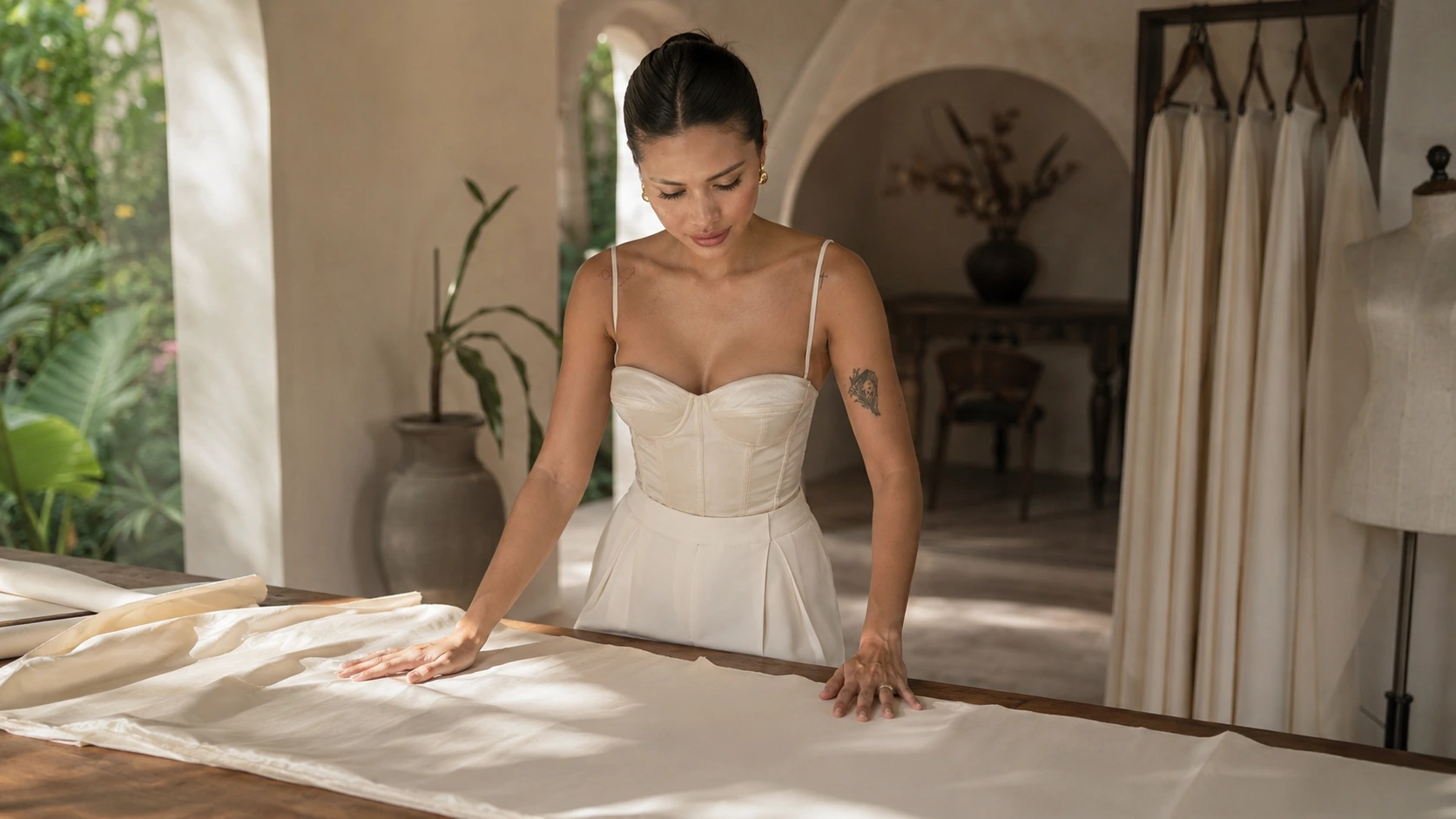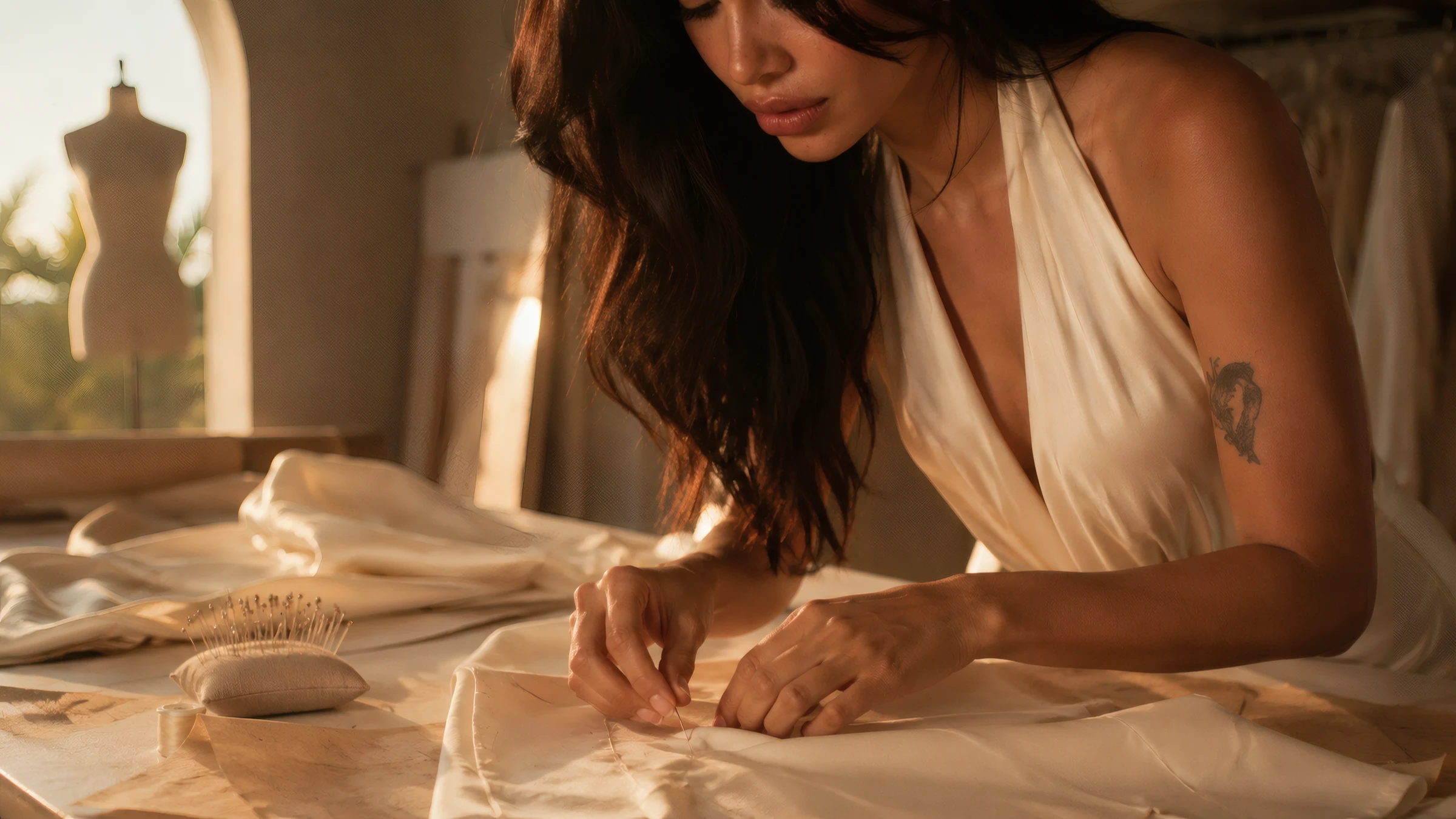
A single perfect pattern must become a whole range of sizes without losing its proportions. Grading — the precise, invisible craft of scaling a garment to many bodies.
A patternmaker perfects a single pattern, usually in one sample size, until it fits the form like a second skin. Then comes a quieter, more mathematical task: turning that one pattern into a full range of sizes, each one fitting a different body as faithfully as the original. This is grading, and it is where art submits to arithmetic.
Not simply bigger or smaller
The temptation is to imagine grading as a photocopier set to enlarge — scale the whole pattern up by ten percent and move on. It does not work, because bodies do not grow uniformly. As a figure increases in size, the bust, waist and hip widen by different amounts; the shoulder broadens far less than the hip; the back length grows only a little. A pattern blown up evenly would produce a larger garment with the proportions all wrong. True grading distributes growth unevenly, exactly as the body does.
“Grading is where you prove you respect every woman, not just the one the sample was made for. A size is not a smaller or larger idea of beauty — it is the same idea, kept true.”
Yaya, Founder & Creative Director
The grade rule
At the heart of grading is the grade rule — a set of precise increments that tells the patternmaker exactly how much to grow or shrink the pattern at each key point as it moves from one size to the next. Every important spot on the pattern has its own value:
- Across the bust, waist and hip, where the bulk of the size change is divided — and rarely shared equally between them.
- Up through the armhole and shoulder, which change only modestly so the upper body stays in proportion.
- Along the back length and the side length, where small vertical increments keep the waist and hem sitting where they should.
- At the neck and sleeve, where over-grading would leave a small size with a gaping neckline or a large size with a strangling cuff.
How the lines move
In practice, grading shifts the pattern's outline outward or inward from fixed reference points along the grainline and a perpendicular axis. Each point on the pattern travels a measured distance in two directions, and the curves are redrawn to connect the newly placed points. Done by hand, it is patient, ruler-and-pencil work; done digitally, the same rules are applied by software — but the logic is identical, and a grader who does not understand the hand method cannot trust the screen. The danger is always the same: a grade that is internally inconsistent produces a size that fits no one well, even though every individual measurement looks correct.
Why a small house grades with such care
It would be easier, and cheaper, to grade quickly and loosely — to accept that the smallest and largest sizes will fit less well than the sample. Many houses do exactly that, which is why a woman at the edges of a size range so often feels the garment was not made for her. The maison treats grading as a matter of respect: the same care that perfected the sample size is owed to every size. Where the range is wide, base patterns are re-fitted at more than one anchor size, so the proportions never drift at the extremes. The woman who is rarely fitted well deserves to be fitted best.
Grading is the least romantic chapter of patternmaking and, in its way, the most generous. It is the craft that lets one beautiful idea belong to many bodies — without asking any of them to compromise.