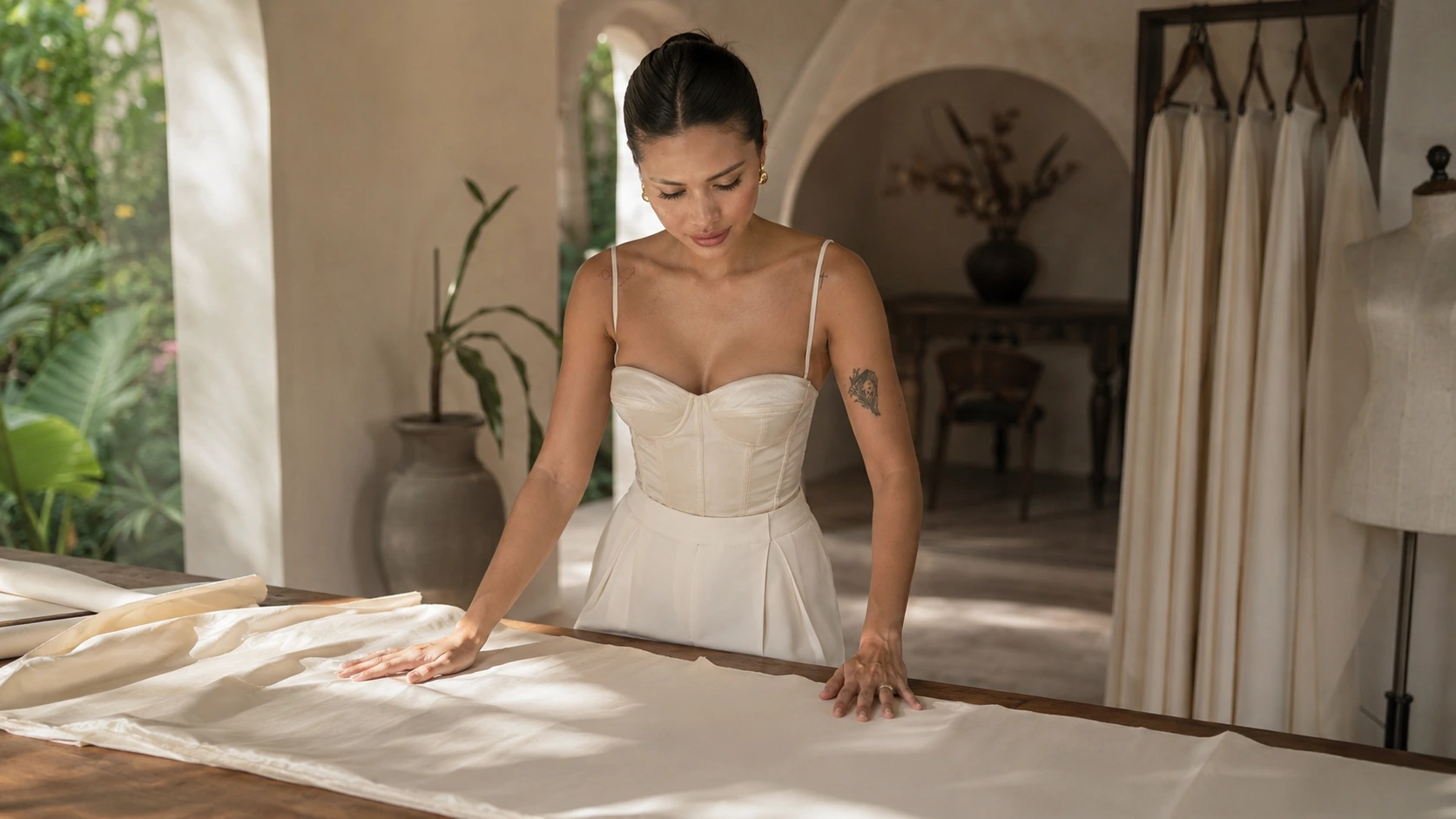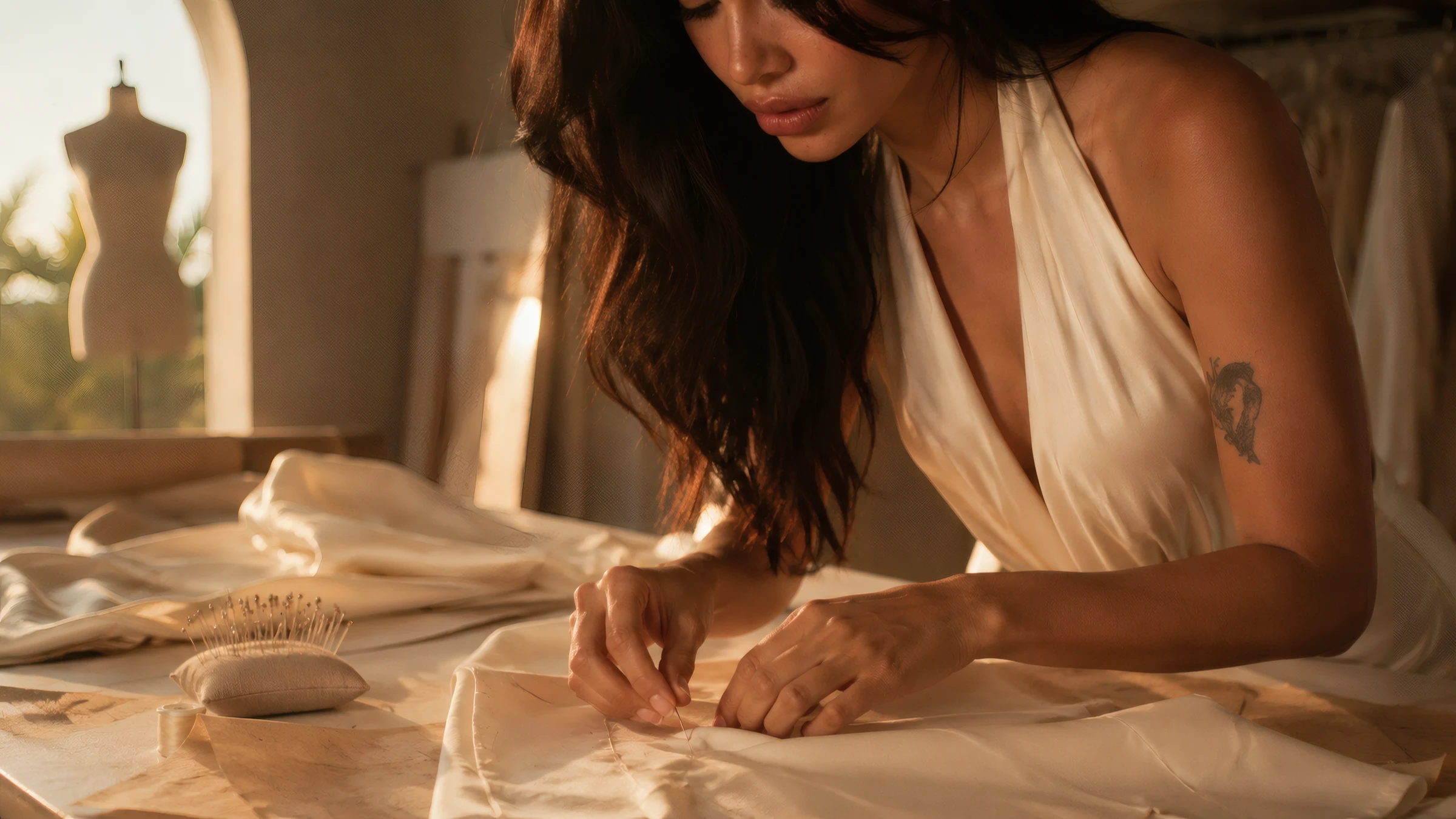
No collection begins with a design. It begins with a block — the styleless foundation pattern from which every dress, shirt and trouser is born. Meet the maison's quiet origin.
Before a single dress is imagined, an atelier must possess something far less glamorous and far more important: the block. Also called a sloper, it is a foundation pattern with no style at all — no neckline of note, no pocket, no flare — fitted with obsessive precision to a particular body or form. Plain, almost dull to look at, the block is nonetheless the mother of every garment the house will ever make.
A pattern with no design
The block exists to capture the body, and nothing else. It records, in its quiet lines, exactly how cloth must travel over this bust, this waist, this shoulder, with the minimum wearing ease and not a trace of fashion. A bodice block, a sleeve block, a skirt block, a trouser block — a working atelier keeps a small library of them. They are never worn and never sold. They are the truth against which every design is drawn.
“The block is the body, learned by heart. Once I have it, I can draw anything — because I am no longer guessing at the woman underneath.”
Yaya, Founder & Creative Director
How a design is born from it
Every garment begins as a modification of the block. The patternmaker traces it, then changes only what the design requires, confident that the fit beneath is already sound. The standard moves are few, and from them flows an entire collection:
- Adding design ease — opening the block to create the soft volume of a relaxed shirt or an unstructured coat.
- Moving or rotating darts — sending the block's shaping into a seam, a gather, or a new and invisible place.
- Slashing and spreading — cutting into the traced block and opening the pieces to introduce flare, fullness or a swing in the skirt.
- Reshaping the edges — lowering a neckline, deepening an armhole, lengthening a hem, always from a base whose fit is already proven.
Why the foundation must be perfect
Because every design inherits the block, every flaw in the block is inherited too. If the foundation pulls a little across the back, so will the gown, the shirt and the jacket drawn from it — a single error multiplied across an entire wardrobe. This is why the maison spends so long on its blocks and revisits them so rarely once they are right: a true block is a costly thing to build and a priceless thing to own. Refining the foundation is the most leveraged hour a patternmaker spends all year.
The house's signature, hidden in plain pattern
There is a deeper reason the block matters to a maison. Two houses given the same design brief will produce subtly different garments, because their blocks carry different ideas of the body — a particular ease through the waist, a favoured shoulder slope, a preferred length of back. The block is where a house's sense of fit lives. It is the quiet signature beneath everything, the reason a woman can tell, before she reads a label, that a garment is YAYA. Style is what you see. The block is what you feel.
So the next time you slip into a piece and find it simply right — right before you have adjusted anything, right in a way you cannot name — you are feeling the block. The most important pattern in the atelier is the one you will never see.