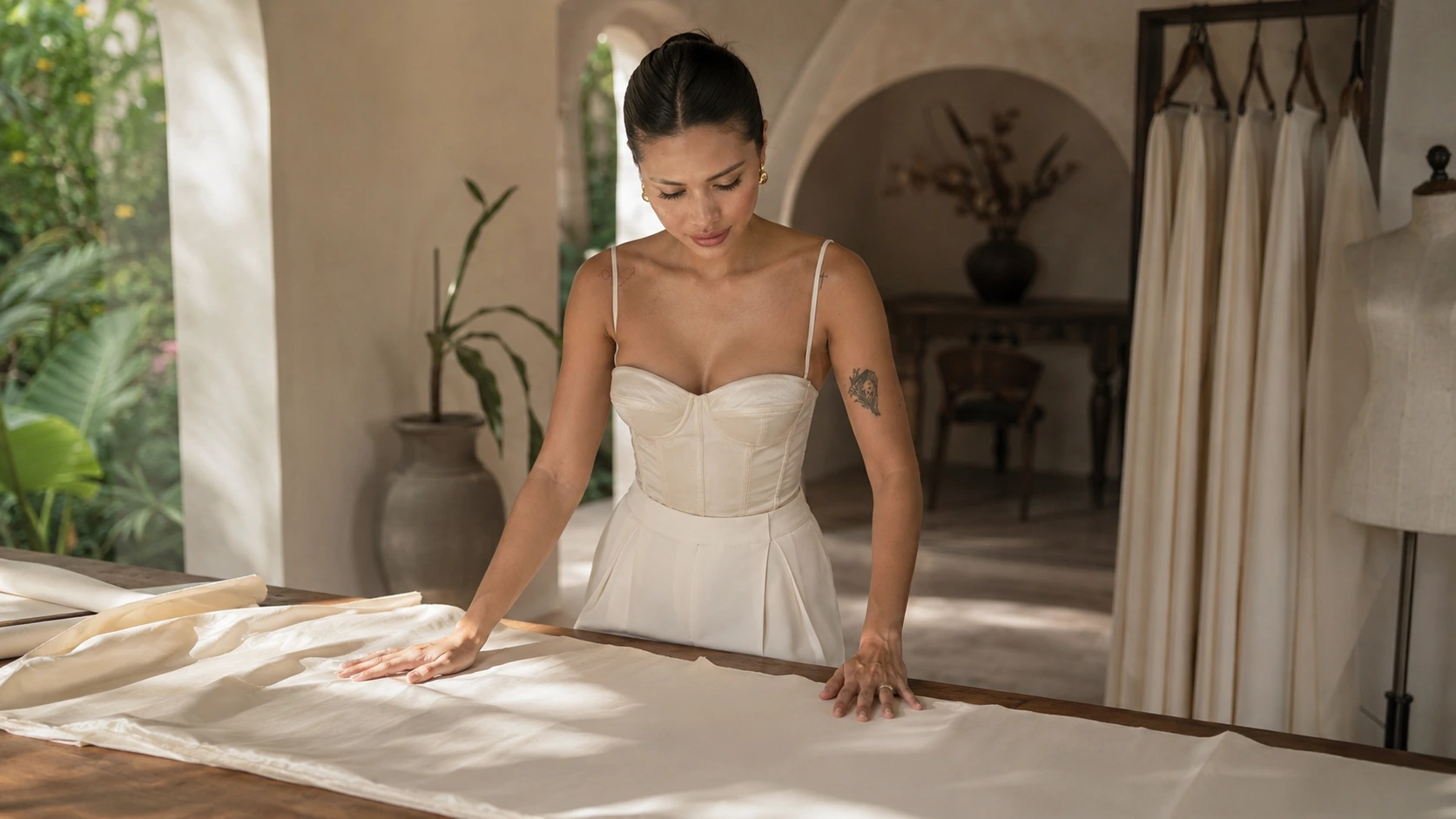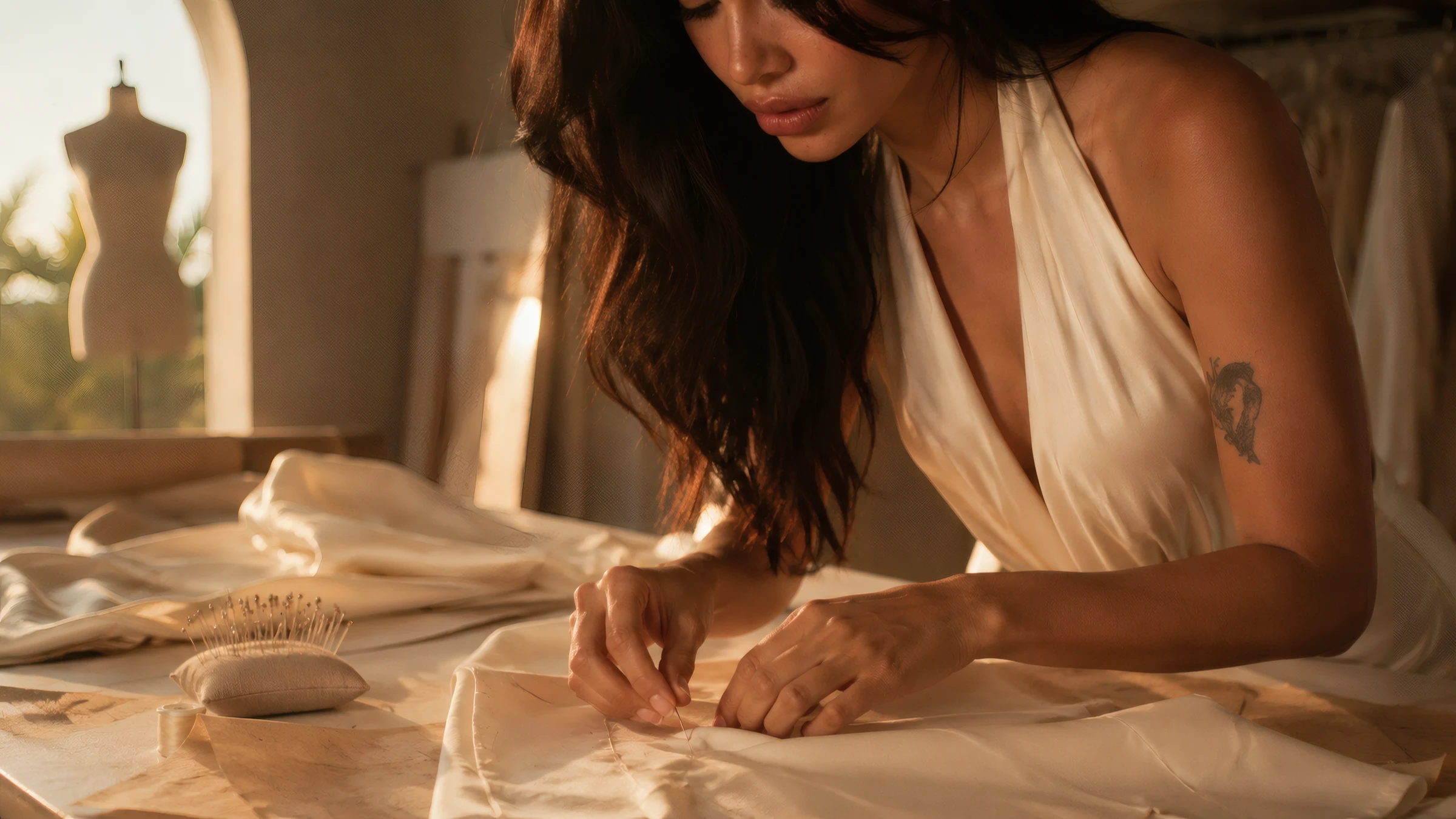
Before a dress exists, it lives as paper. An introduction to patternmaking — the quiet architecture that turns a body and an idea into cloth that moves.
Every garment you have ever loved began as a flat shape on paper. Long before the cloth, before the fitting, before the first stitch, there is the pattern — a set of two-dimensional pieces drawn to coax a flat material around a body that is anything but flat. Patternmaking is the discipline that bridges the two: it is how an idea becomes a thing you can wear.
It is also the most invisible craft in fashion. A woman admires the way a jacket falls open without gaping, or the way a skirt swings cleanly from the hip, and she rarely thinks of the pattern. Yet that ease is not luck. It is geometry, drawn by a hand that understands the body.
Translating a curve into a line
The human body is a landscape of curves — the swell of the shoulder, the hollow of the small of the back, the gentle taper from waist to hip. Cloth, by contrast, arrives as a flat plane. The patternmaker's entire art is the translation between these two states: how do you carve a flat shape that, when sewn, wraps a sphere? The answer is a vocabulary of darts, seams, eased curves and grainlines, each one a small decision about where the cloth will fold, gather or release tension.
“A pattern is a portrait of a body drawn in paper. Before I cut a single thread, I already know how the woman will move in it.”
Yaya, Founder & Creative Director
The two roads into a pattern
There are two principal methods, and a good atelier uses both. The first is flat patternmaking — drafting the pieces directly on paper from a set of body measurements and a base block. It is precise, repeatable and architectural. The second is moulage, or draping, where cloth is pinned directly onto a dress form and the three-dimensional shape is discovered by hand, then traced back onto paper. Flat work gives you control; draping gives you discovery. The slip gown is almost always draped; the tailored trouser is almost always drafted.
The anatomy of a pattern piece
Open any professional pattern and you will find it covered in marks that are not decorative. Each one is an instruction the patternmaker leaves for the cutter and the sewer:
- The grainline — an arrow that tells the cutter exactly how to align the piece with the weave of the cloth, so the garment hangs true rather than twisting on the body.
- Notches — small marks along the seam edges that must be matched, like the registration marks of a map, so two curved pieces meet without puckering.
- Seam allowance — the strip of fabric beyond the final stitching line, the margin that lets the garment be sewn and, later, altered.
- Darts and balance marks — the folds that build shape, and the points that keep the front and back in conversation as they curve around the figure.
Why it matters to the woman who wears it
Fabric can be the finest royal-grade Thai silk in Asia, and the colour can be a flawless ivory, but if the pattern beneath is wrong, the dress will fight the body forever. A bodice will gape, a sleeve will bind when the arm lifts, a hem will dip at the back. Conversely, a quietly perfect pattern makes an ordinary moment — reaching for a glass, crossing a room — feel effortless. This is the real luxury of patternmaking: not what you see, but what you stop noticing.
In the articles that follow, we open the maison's paper drawers one at a time — the bias cut, the dart, the moulage, the seam allowance, the grade rule, and finally the full column dress, drafted line by line. Begin here, and the rest of the craft unfolds.