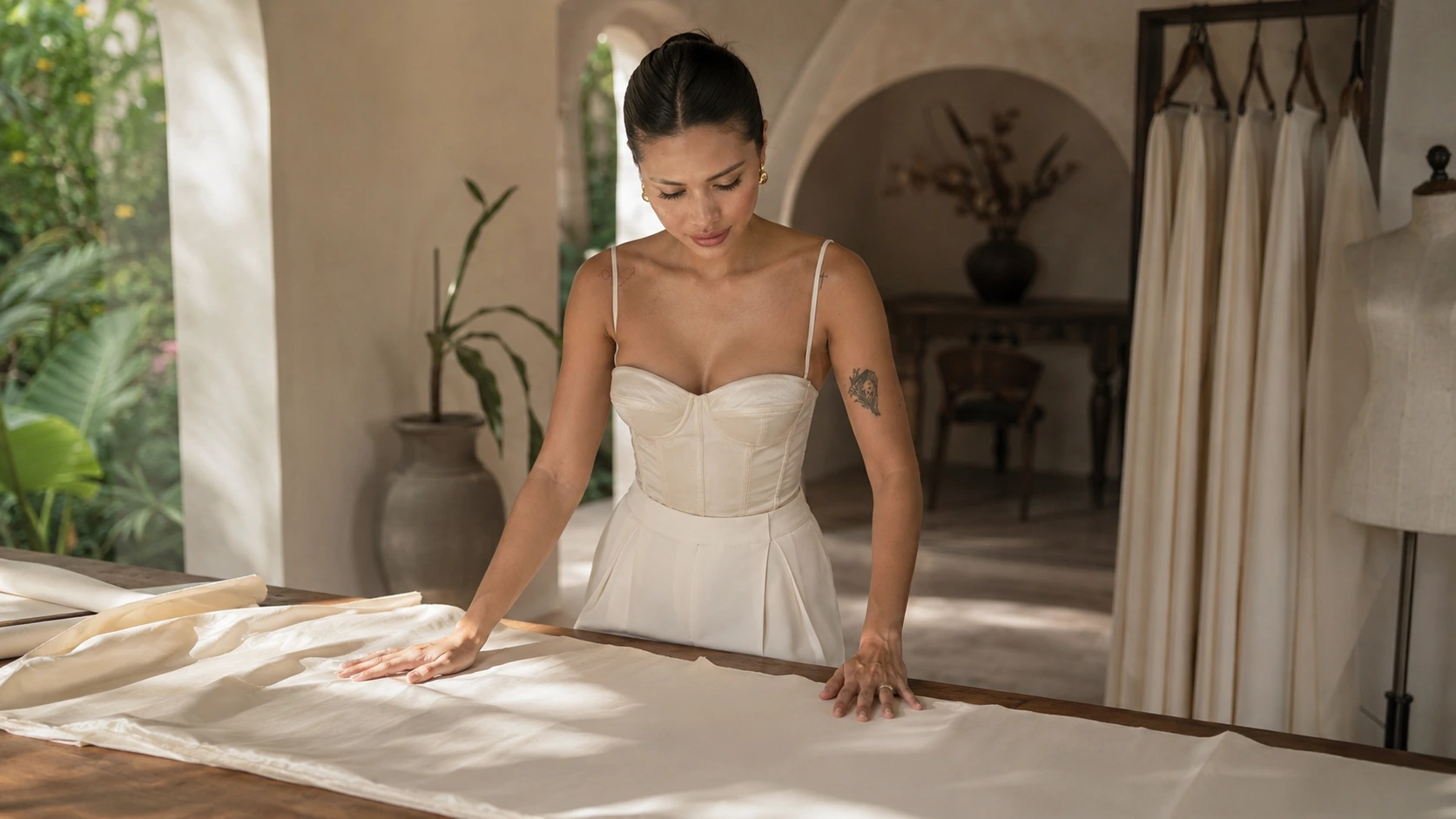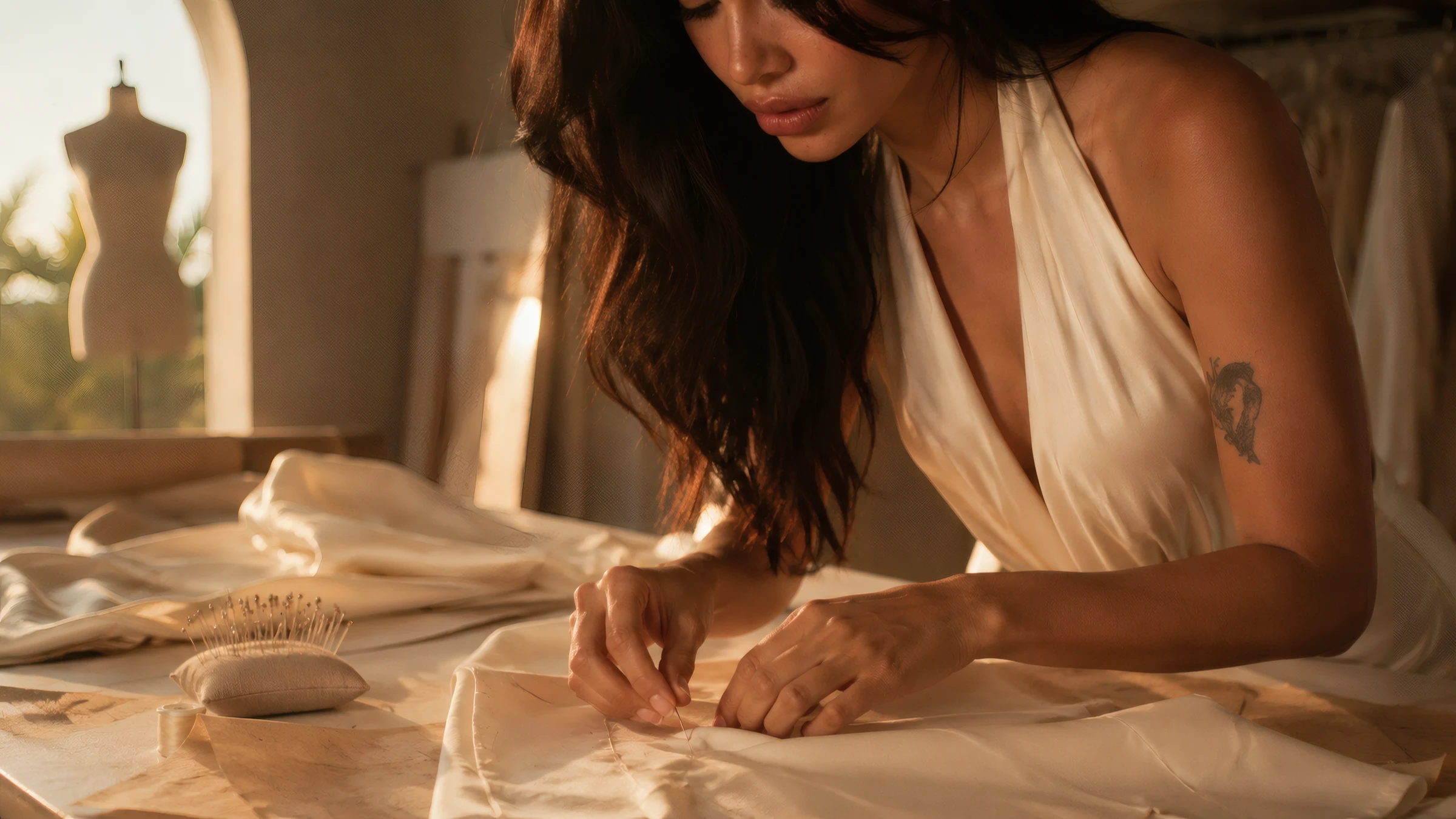
Some shapes can only be found by hand. Inside moulage — the couture practice of draping fabric directly on the form to discover a garment as it is born.
There is a way of making clothes that begins with no measurements at all. No drafting, no rulers, no numbers — only a length of cloth, a dress form, a fistful of pins, and a pair of hands that have learned to listen to fabric. It is called moulage, the French word for moulding, and it is the most intuitive and the most demanding discipline in the atelier.
Drawing in three dimensions
Where flat patternmaking starts from numbers and works toward a shape, moulage works the other way: the patternmaker drapes the cloth directly onto a padded dress form, pinning and folding and smoothing until the three-dimensional garment appears under her hands. She is not drafting a sleeve — she is discovering one. The fabric tells her where it wants to fold, where it pulls, where a dart must go. Only once the shape is right is it traced flat, becoming the paper pattern that drafting would have started from.
“When I drape, I am not imposing a shape on the cloth. I am asking the cloth what it wants to become, and most of the time it knows better than I do.”
Yaya, Founder & Creative Director
Why drape at all
Some garments simply cannot be drawn. A cowl neck that pools in soft folds, a bias gown that pours over the hip, an asymmetric drape that gathers at one shoulder — these live in the relationship between gravity, weight and weave, and no flat draft can predict how a particular silk will fall. Moulage lets the designer see the real behaviour of the real cloth before a single permanent stitch is made. It is the only honest way to design a garment whose beauty is its movement.
The grammar of the drape
Draping looks improvisational, but it follows a strict discipline. The patternmaker observes a sequence on every piece:
- Marking the form first — the centre front, centre back, bust, waist and hip lines are taped onto the form so the drape has a true skeleton to build on.
- Respecting the grain — the straight grain of the cloth is kept plumb and level at the centre, or deliberately turned to the bias, never left to chance.
- Working with the real fabric — a structured wool and a fluid silk fall so differently that draping in the wrong cloth teaches the wrong lesson; the maison drapes in the actual weight whenever possible.
- Truing the lines — once pinned, the rough draped shape is marked, removed, and its wandering pin-lines are smoothed into clean, sewable curves before it becomes a pattern.
The dialogue of two methods
The finest ateliers do not choose between draping and drafting; they let the two methods talk to each other. A garment may be draped to discover its silhouette, then trued and refined on paper for precision and repeatability, then re-draped in the final cloth to confirm the fall. A tailored trouser leans on drafting; a fluid evening gown leans on moulage; a structured dress with a soft skirt may use both within a single pattern. Knowing which language a garment speaks is itself a mark of the craft.
To watch a length of Thai silk become a gown on the form — pinned, smoothed, coaxed into being with no drawing in sight — is to understand that patternmaking is not only geometry. It is also touch, patience, and the humility to let the cloth lead.