Cut a length of silk at forty-five degrees and it learns to flow. The story of the bias cut — Vionnet's revolution and why it still defines the maison's slip gowns.
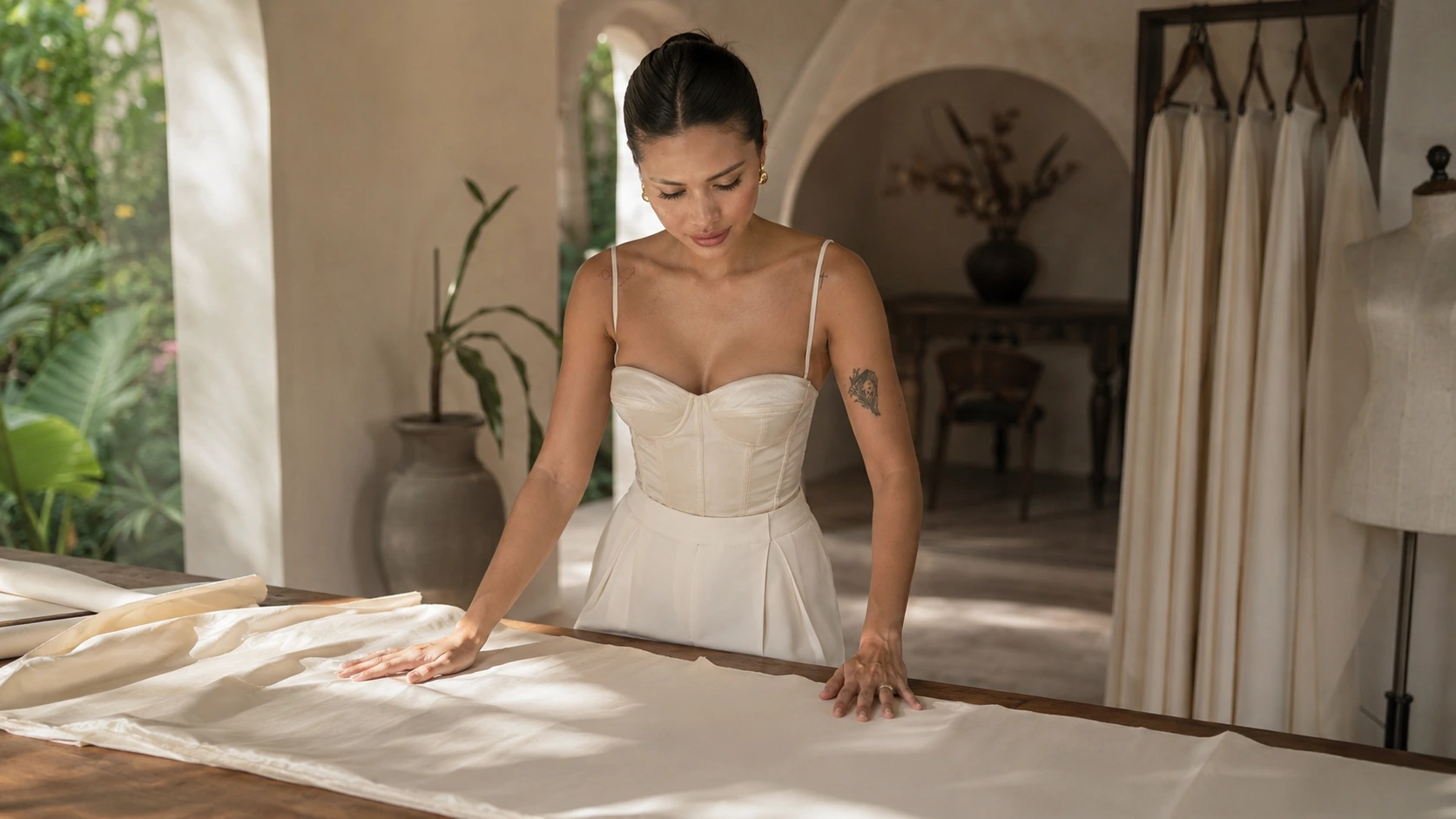
Take a length of silk and lay it flat. Pull it gently along its length and it barely yields. Pull it across its width and it resists too. But pull it on the diagonal — at forty-five degrees to the woven threads — and something extraordinary happens. The cloth stretches, softens, and pours from your hands like water. This is the bias, and it is the single most transformative idea in the cutting of cloth.
What the bias actually is
Woven fabric is built from two sets of threads at right angles: the warp running the length of the bolt, and the weft running across it. Together they form the straight grain — stable, firm, with almost no give. The true bias runs at exactly forty-five degrees to both. Because no single thread runs along that diagonal, the weave itself can flex, and the cloth gains an elasticity it never had on the grain. A bias-cut panel does not need darts to follow the body. It simply melts onto it.
“On the bias, silk stops being fabric and becomes a second skin. You are no longer dressing the woman — you are letting the cloth fall in love with her.”
Yaya, Founder & Creative Director
The woman who freed the body
The bias cut existed for centuries as a way to finish edges, but it was Madeleine Vionnet in 1920s Paris who understood it as architecture. She draped half-scale on a small wooden mannequin, turning the cloth on the diagonal so her gowns clung and released without corsetry, without fastenings, without the rigid scaffolding that had imprisoned women's bodies for generations. Her dresses could be stepped into. They moved. To this day, a true bias slip is a quiet act of liberation, and every maison that cuts one is in conversation with her.
The discipline behind the ease
The paradox of the bias is that effortless drape demands extraordinary effort. The cutting is slow and exacting:
- Every panel must be cut at a true forty-five degrees, or the garment will twist on the body within an hour of wearing.
- Bias cloth grows. A panel left to hang overnight before sewing will lengthen by a centimetre or more, so the pieces must rest, suspended, before the hem is ever marked.
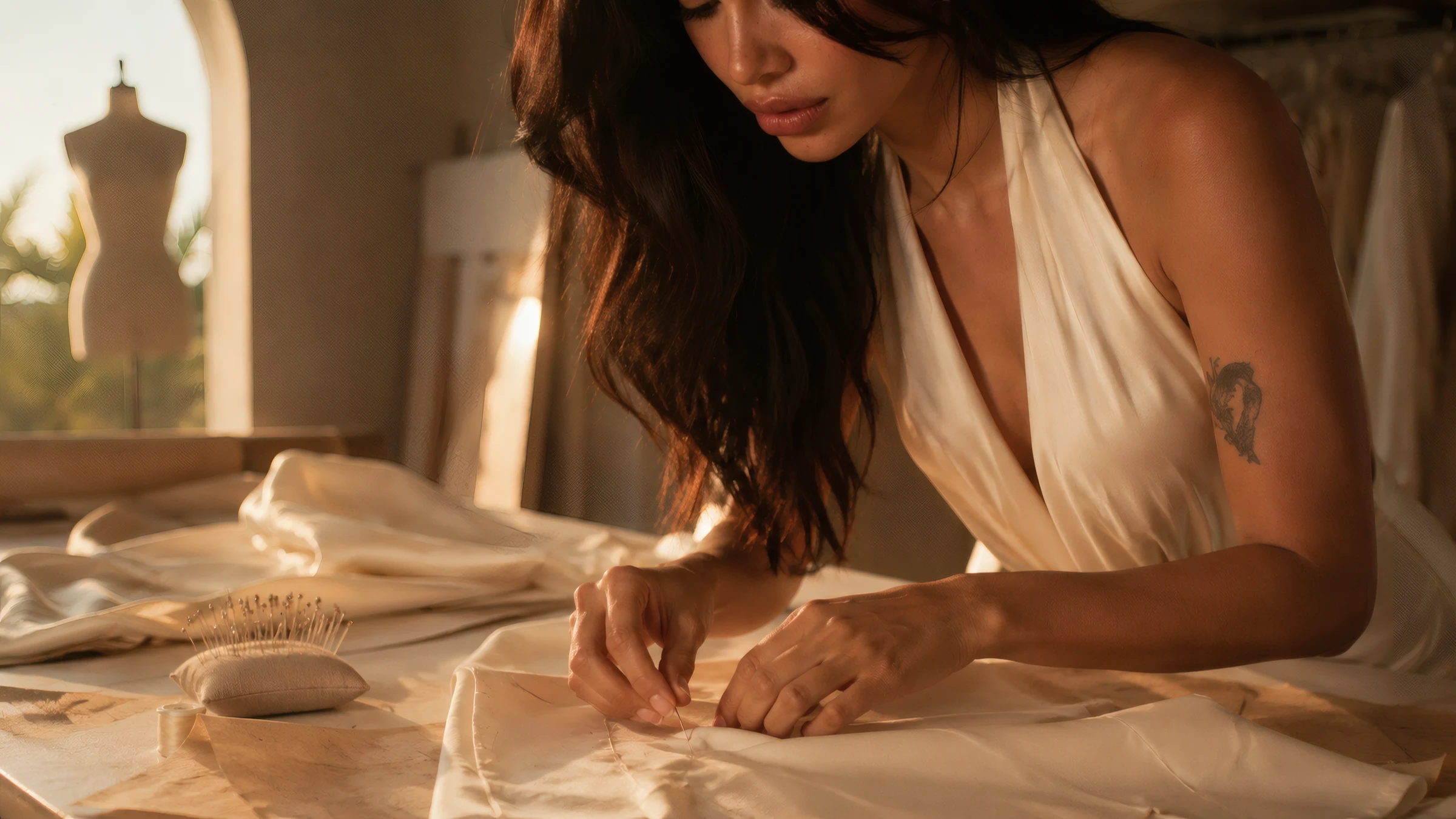
- Seams are stitched with the fabric supported, never stretched, so the natural give is preserved rather than sewn out.
- The hem is cut and levelled last of all, on the body or the form, because no bias hem can be trusted from the flat.
Why we cut so few of them
A bias gown consumes far more cloth than a straight-grain one — the diagonal layout wastes the corners of every metre, and royal-grade Thai silk is not a material one wastes lightly. It takes longer to cut, longer to settle, longer to finish. We accept all of this because nothing else falls the way a bias panel falls. The Bias Silk Slip Gown in the L'Aurore collection is cut from a single weight of mulberry silk, allowed to hang for three days, and hemmed only when the cloth has told us where it wants to end.
When you wear it, you will feel the difference before you see it: the way the silk follows you a half-beat late, the way it settles rather than holds. That delay, that softness, is forty-five degrees of geometry doing its quiet work.