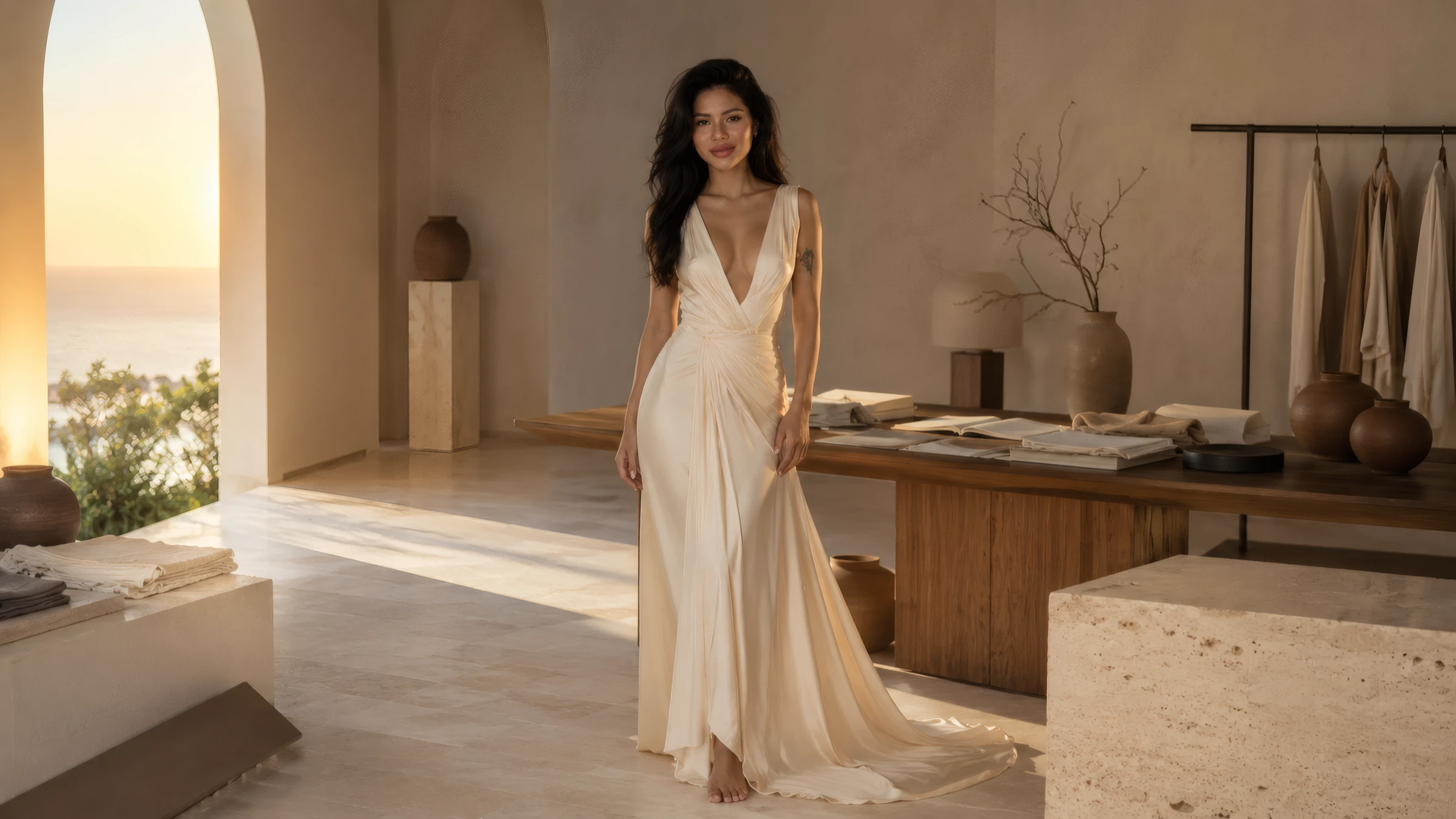
Authority no longer needs armour. How Maison YAYA dresses the woman who leads — without the borrowed severity of the boardroom uniform she was once handed.
For most of the last century, a woman who wanted to be taken seriously was handed a costume. It was borrowed almost entirely from men — the broad shoulder, the hard lapel, the suit built to read as authority because authority, at the time, was assumed to look male. Generations of capable women wore that armour because it was the only language of seriousness available to them. The maison was founded, in part, on the conviction that this is no longer the case, and perhaps never truly was.
Authority is no longer borrowed
The woman who leads today does not need to disguise herself as the men who led before her. Her authority is her own, and it does not require the visual vocabulary of someone else's. This is a genuine shift, and dress is slow to catch up to it. A great deal of so-called power dressing is still armour — clothing designed to project hardness, as though grace and seriousness could not occupy the same body. Maison YAYA begins from the opposite assumption: that a woman can lead and be entirely, unmistakably herself, and that her clothes should make this easier rather than harder.
“The most powerful woman in the room is rarely the one dressed to look powerful. She is the one whose clothes have stopped being a strategy.”
Yaya, Founder & Creative Director
What grace under authority actually requires
Dressing the woman who leads is a problem of construction before it is a problem of style. The garment has to do real work — it has to move, hold, and read correctly across a long and demanding day — without ever resorting to severity to do it.
- A shoulder cut for her frame, not narrowed from a man's block, so the line is hers and the authority looks native.
- Cloth that holds its composure for fourteen hours — that does not crease into fatigue by the afternoon meeting.
- Ease through the body that allows movement, because a woman who cannot reach, sit, or breathe easily is being constrained, not dressed.
- A restraint of detail that keeps the eye on her face and her words, never on the cleverness of the clothing.
The difference between armour and a frame
Armour and a well-cut garment can look superficially similar; both give structure to the body. But they do opposite things. Armour defends — it implies a threat, braces against being seen, and makes the wearer rigid. A frame supports — it holds the figure with quiet certainty and then disappears, the way a good frame around a painting draws no attention to itself. The maison builds frames, not armour. We want the woman who leads to feel held, not hidden; composed, not defended. The garment carries some of the day's weight so she does not have to carry all of it.
Grace as a form of strength
There is an old and tired idea that grace is the opposite of strength — that to be gentle is to be less formidable. The women the maison dresses know this is false. Grace under pressure is among the rarest forms of strength there is; it is the discipline of remaining yourself when the room would prefer you smaller or harder. Clothing cannot give a woman that quality. But it can refuse to work against it. It can stop asking her to choose between being respected and being herself.
That is the whole of our intention for the woman who leads. Not to dress her as a soldier, and not to soften her into invisibility, but to give her garments that take her authority as a settled fact and simply get out of its way. She does not need to look powerful. She is. Her clothes should be confident enough to let that speak for itself.