Maison YAYA was not founded to fill a gap in the market. It was founded to make a quiet argument against how the luxury industry had come to work.
Houses are usually founded to fill a gap in a market, and ours was not. The market for luxury clothing is, if anything, overcrowded. There was no missing price point we had spotted, no underserved customer we had identified in a spreadsheet. Maison YAYA began for a less commercial and more stubborn reason: as a quiet argument. An argument about how clothing had come to be made, and a refusal, made in cloth, to accept it.
The thing that had gone wrong
Yaya spent years inside the industry, and what she saw was a slow severing of the word luxury from the thing it once described. Luxury had meant a garment made slowly, by skilled hands, to last a lifetime. Increasingly it meant a garment made quickly, finished by machine, marketed as craft, and priced for the story rather than the substance. The hand was disappearing. The calendar was accelerating. And customers, paying more than ever, were often receiving less than their grandmothers had. This was not a gap in the market. It was a wrong, and it asked to be answered.
“I did not start a business. I started a disagreement — and decided the most honest way to make it was to put it into clothes people could hold.”
Yaya, Founder & Creative Director
An argument made in cloth
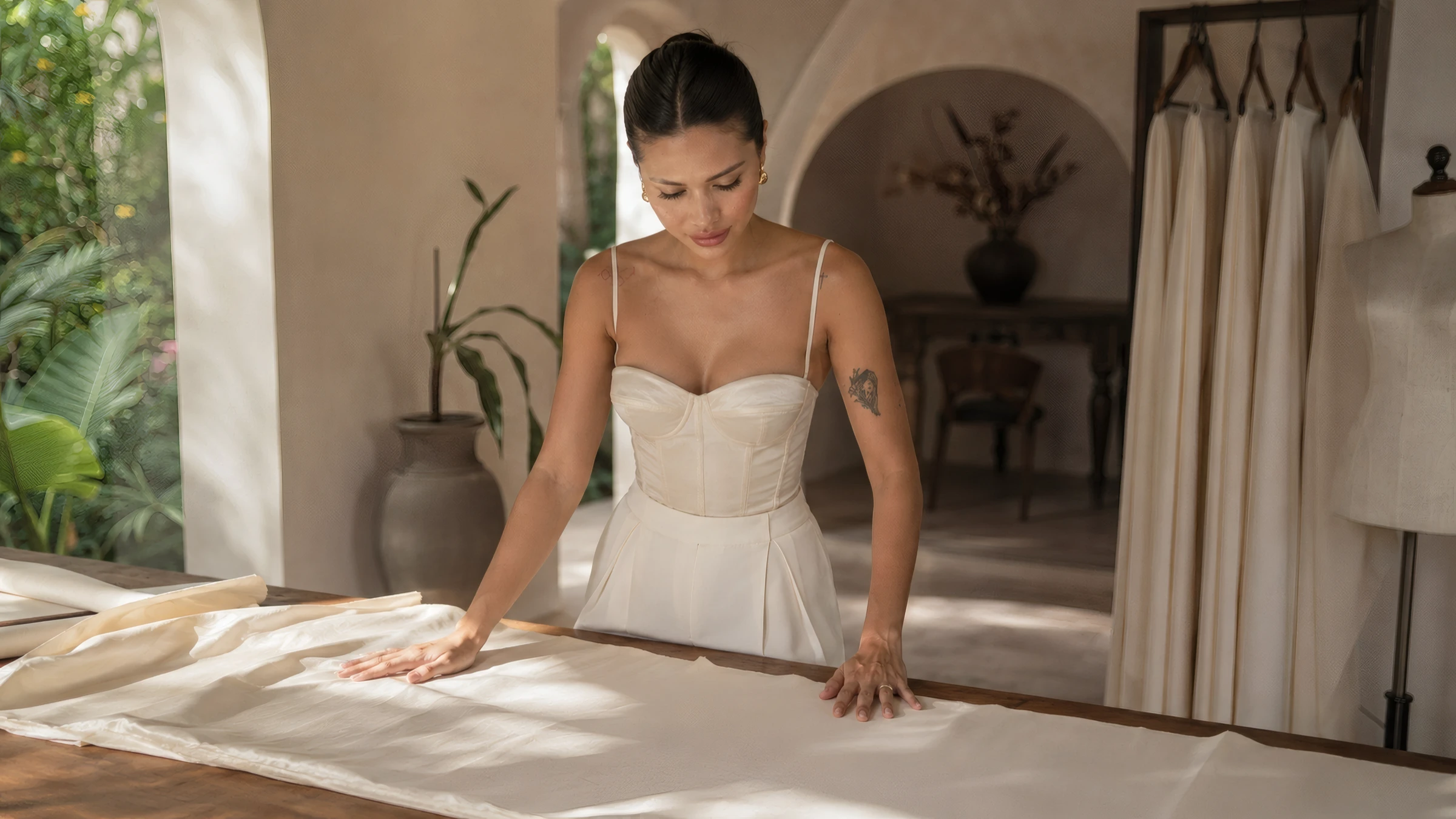
There are many ways to disagree with an industry. You can write about it, complain about it, or leave it. Yaya chose the hardest and most convincing way: to demonstrate the alternative. Each garment the maison makes is a sentence in a longer argument that the old way is not only better but still possible.
- That a hem finished by hand is worth the hours it takes, and that you can feel the difference.
- That cloth chosen for honesty rather than margin produces a garment worth keeping.
- That a small house, making little, can outlast a large one making fast.
- That a customer told the truth about how a thing was made will choose well, given the chance.
Why an argument, and not just a brand
A brand wants you to feel something and buy something. An argument wants you to understand something and decide for yourself. The distinction matters to how the maison behaves. We do not try to make you anxious about being out of season, because the argument does not require your anxiety — it requires your attention. We would rather you understood why a garment is made the way it is and then chose freely than that you bought it out of a fear we manufactured. The argument only wins if you are convinced, not if you are pressured.
What winning would look like
The maison does not measure itself only in pieces sold. It measures itself in whether the argument is taking hold — in the woman who buys one well-made coat and stops buying five disposable ones, in the customer who learns to read a garment and can no longer be fooled by a story, in the slow return of the idea that fewer and better is not a compromise but the point. If the house succeeds commercially while losing that argument, it has failed at the only thing it was founded to do.
So when we are asked why we began, the honest answer is not a market opportunity. We began because something true about how clothes were made was being quietly lost, and the most persuasive way to defend it was to keep doing it, in full view, one honest garment at a time. The maison is the argument. Every piece is a sentence. And we intend to keep making the case for as long as it needs making.