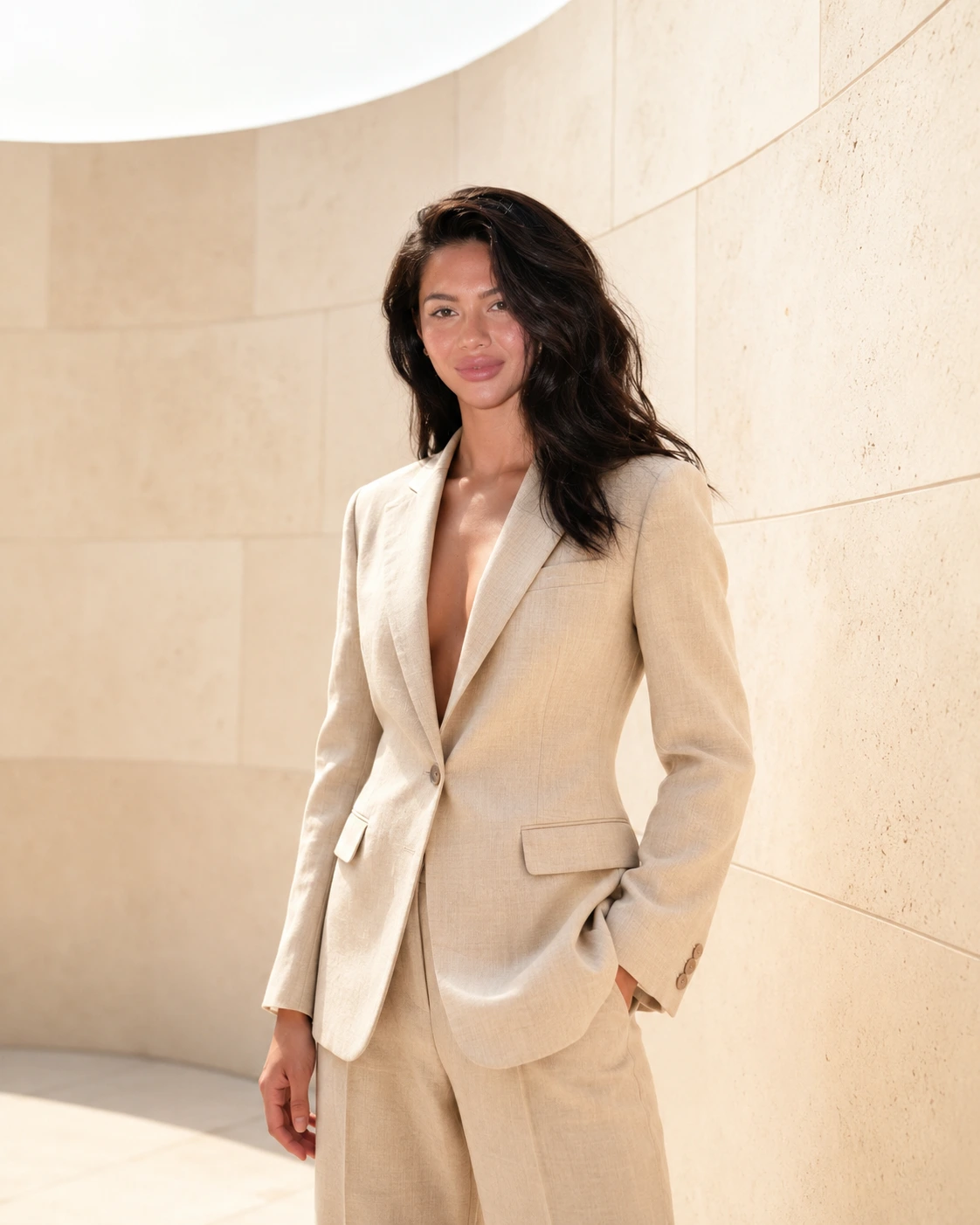
A well-cut jacket is not an expense but a calculation that improves with time. On cost-per-wear, the patina of fine cloth, and why true luxury is measured in decades, not seasons.
There is a particular kind of garment that gets better the longer you own it. Not merely durable — better. The colour deepens, the cloth softens to the body, the cut that looked correct at the start comes to look inevitable. A well-tailored jacket belongs to this rare category, and understanding why changes the way you think about the price of clothes entirely.
The arithmetic nobody does
We are taught to read the price on the tag and stop there. But the only honest measure of what a garment costs is what it costs each time you wear it. A fast-fashion blazer worn a dozen times before it bubbles, loses its shape and is quietly discarded is expensive — ruinously so — by the wear. A canvassed jacket worn weekly for fifteen years is, by the same arithmetic, almost free. The expensive thing was never the well-made jacket. It was everything you replaced because it would not last.
“Cheap is a number you pay once. Costly is a number you pay again and again, every time the thing fails you.”
Yaya, Founder & Creative Director
Why the cut, specifically, endures
Trends move at the extremes — the very wide lapel, the very cropped hem, the loud colour of a single season. A good cut lives in the calm centre that the extremes orbit. Lapel widths drift, but a balanced, proportionate lapel never looks wrong. Hems rise and fall, but a jacket cut to honest proportions reads as elegant in any decade. The cut endures because it was never chasing the moment; it was answering the body, and the body does not go out of fashion.
The materials that age instead of wearing out
Longevity is built from honest materials, and these are the ones that improve rather than degrade:
- Pure wool and worsted cloth — these recover their shape with rest and pressing, and develop a soft, lived-in hand rather than a tired one.
- Hand-worked canvas — it cannot delaminate, so the structure simply moulds closer to you with the years.
- Natural-fibre linings of silk or cupro — they breathe, wear slowly, and can be replaced when the day finally comes.
- Horn and corozo buttons — they outlast plastic and earn a faint patina that no new button can fake.
- Hand-sewn seams with a little give — they flex with the body and can be opened, let out and rebuilt rather than failing for good.
Repairable by design
A subtler reason fine tailoring lasts is that it is built to be reopened. Because the best jackets are hand-sewn and carry seam allowances, they can be altered as your body changes over the years — let out, taken in, the cuff turned, the lining renewed. A glued, machine-locked garment offers no such second life; when it fails it is finished. A canvassed, hand-built jacket is, in a quiet way, designed to be repaired for as long as you wish to keep it.
The patina of a life
There is one return on a good cut that cannot be measured in money at all. A jacket you wear for fifteen years gathers a history — the soft fall of cloth shaped by your own posture, the faint warmth a long-loved garment takes on, the sense that it has become, unmistakably, yours. New clothes are anonymous. Old, well-made clothes are biography. That is the deepest argument for the long arithmetic: not only that a good cut saves you money, but that it accrues a meaning a season-long garment never has the time to earn.
What luxury actually means
At the maison we measure luxury in decades, not seasons. To buy fewer things and better ones, to choose the cut that will still look right when you are older, to own a jacket long enough that it becomes part of your story — this is not extravagance. It is the most considered economy there is. A good cut is the rare purchase that grows more right, and more yours, with every year you keep it.