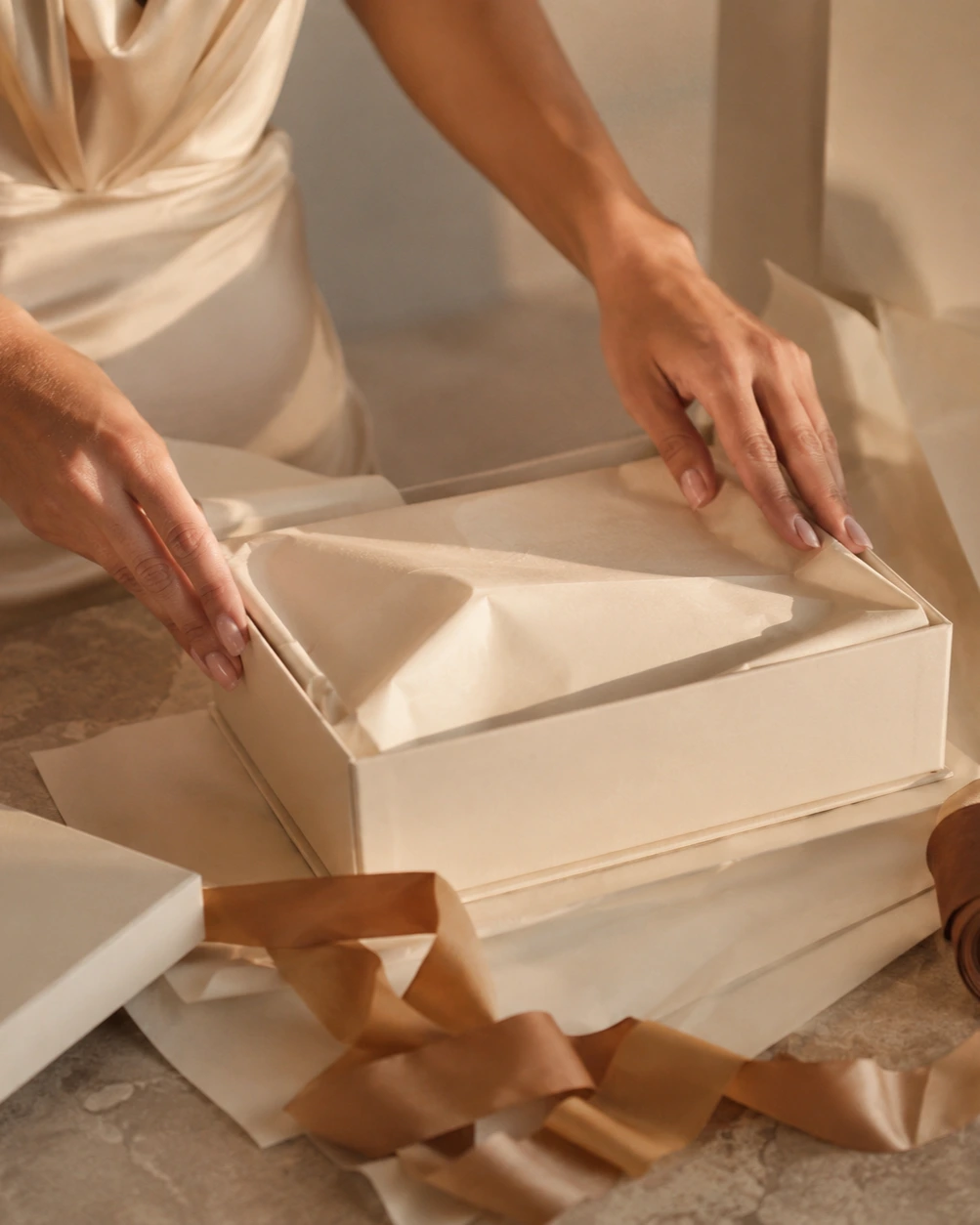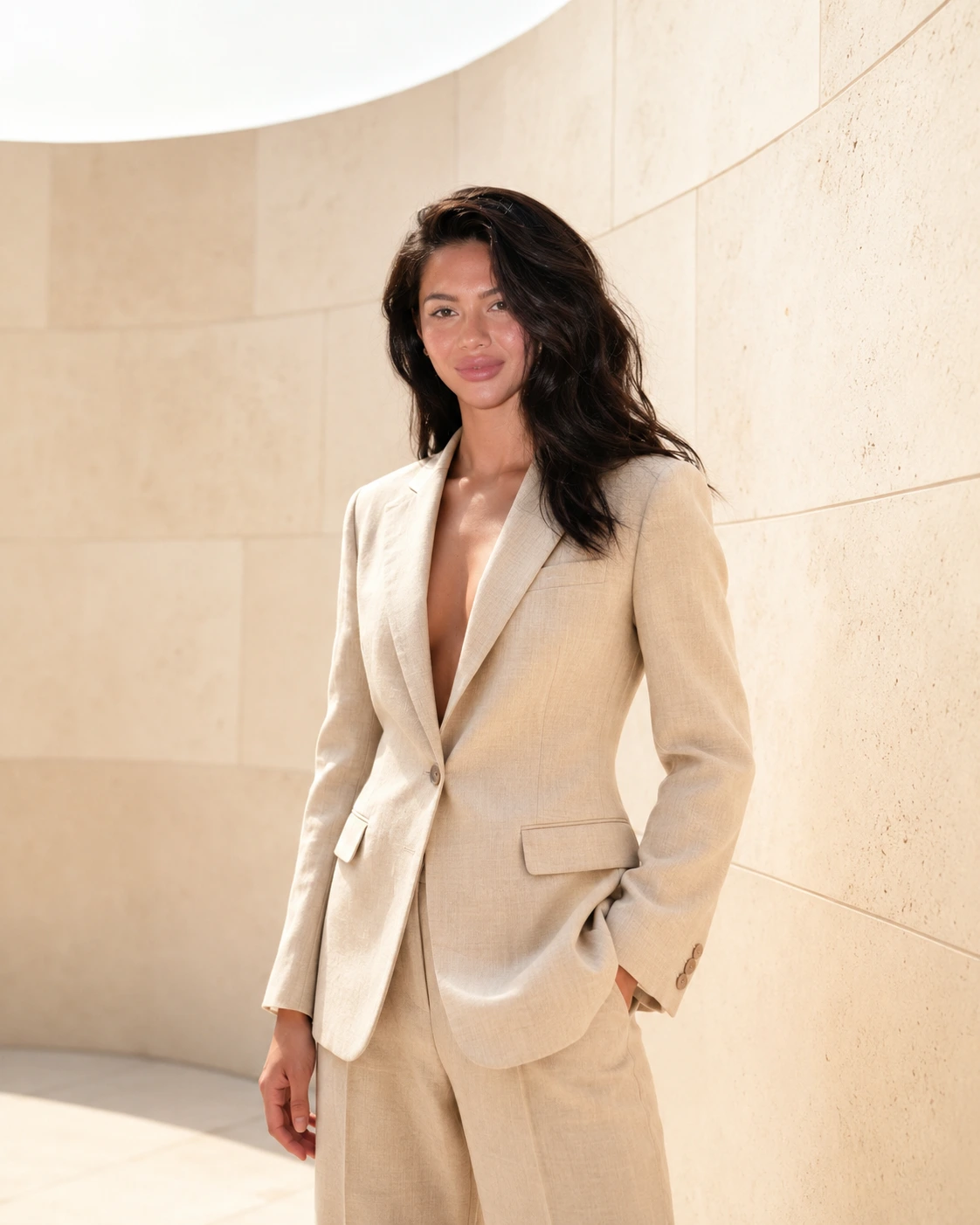
Beneath every collar, cuff and lapel lives an unseen skeleton of canvas, horsehair and felt. A guide to the structures that hold a garment's shape — and the hand that builds them.
Cloth, left to itself, has no will. It drapes, it puddles, it collapses. Everything that gives a tailored garment its posture — the standing roll of a lapel, the crisp turn of a cuff, the gentle fullness of a chest — comes from a hidden skeleton of structuring materials sewn between the outer cloth and the lining. You never see it. You feel its absence instantly when it is missing.
Interfacing: the word for everything underneath
Interfacing is the general name for any layer added between cloth and lining to give shape, body or support. It is the unsung half of tailoring. The art lies not in adding stiffness everywhere but in placing exactly the right weight of structure in exactly the right places — firm where a collar must stand, soft where a chest must drape — so the garment holds its architecture while still moving like cloth.
The members of the skeleton
A serious jacket draws on a small family of traditional structuring materials, each with a job:
- Hair canvas — a springy woven interlining of wool and horsehair that forms the floating chest-piece, giving the chest its living fullness and the lapel its roll.
- Horsehair cloth — stiffer and more resilient, used where real backbone is wanted, such as the front edges and the lapel's roll line.
- Domette or felt — a soft, brushed layer that pads and smooths, often under the collar and over firmer canvas to soften its edge against the body.
- Linen and cotton canvases — lighter weaves used for collars, cuffs and waistbands where you want crispness without weight.
- Lambswool wadding — a whisper of softness laid over the chest-piece to round the cloth and erase any hard line.
“We build the bones first. The cloth is only the skin we lay over a structure that already knows how to stand.”
Yaya, Founder & Creative Director
Pad-stitching: structure made by hand
Having the right canvas is only half the matter; how it is joined to the cloth decides everything. In fine tailoring the canvas is attached by pad-stitching — rows of small diagonal hand stitches that do more than hold the layers together. As the tailor works, she rolls the cloth over her fingers, and the stitching locks a permanent curve into the lapel and a soft dome into the chest. It is, quite literally, sculpture made with a needle. A machine can fuse a flat sheet; only a hand can stitch a three-dimensional shape into being.
Where structure hides in plain sight
Once you know the skeleton is there, you start to feel it everywhere. The collar that stands and grips the neck — structured. The cuff that turns crisply without crushing — structured. The waistband on a trouser that holds its line all day — structured. Even a soft, unstructured jacket, the kind built deliberately without padding, is a decision about structure: the choice to let the cloth speak almost alone, which only the most beautiful cloth can survive.
Why the bones outlast the trend
Fashion changes the skin — the colour, the cut, the lapel width of the season. The skeleton is what endures. A garment built on hand-worked canvas keeps its posture for decades because nothing inside it can fail; there is no glue to surrender, no fused sheet to bubble away. When we build at the maison, we build the bones to last longer than the fashion that prompted them, so that the garment stands straight long after the moment that inspired it has passed.
Learn to ask what holds a garment up, and you will start choosing very different clothes. The surface is the argument. The skeleton is the truth.