Why every couture garment begins as a toile — a calico ghost of the final dress — and how the fitting process turns a flat pattern into a piece made for one body.
No couture gown is ever cut from its real fabric first. Before a single thread of silk is touched, the dress is born twice — once as an idea, and once as a ghost. The ghost is the toile: a full version of the garment sewn in plain calico, colourless and humble, that exists only to be corrected and then taken apart. To watch a couturier work on a toile is to watch a sculptor work in clay before committing to marble. The cheap cloth is the whole point. You cannot learn freely on something precious.
Why calico, and why first
Calico — toile in French, muslin to many — is unbleached, inexpensive, and crucially, it behaves predictably. It has a clear grain you can see and trust, and it holds a pin and a pencil line. The maker drapes or assembles the toile, then draws directly onto it: balance lines, the true position of a dart, where a seam wants to move. Every problem a design has will reveal itself in calico — a sleeve that pulls, a neckline that gapes, a hem that swings off true. Better to find it here, on cloth worth nothing, than in the silk.
The fitting: a conversation in pins
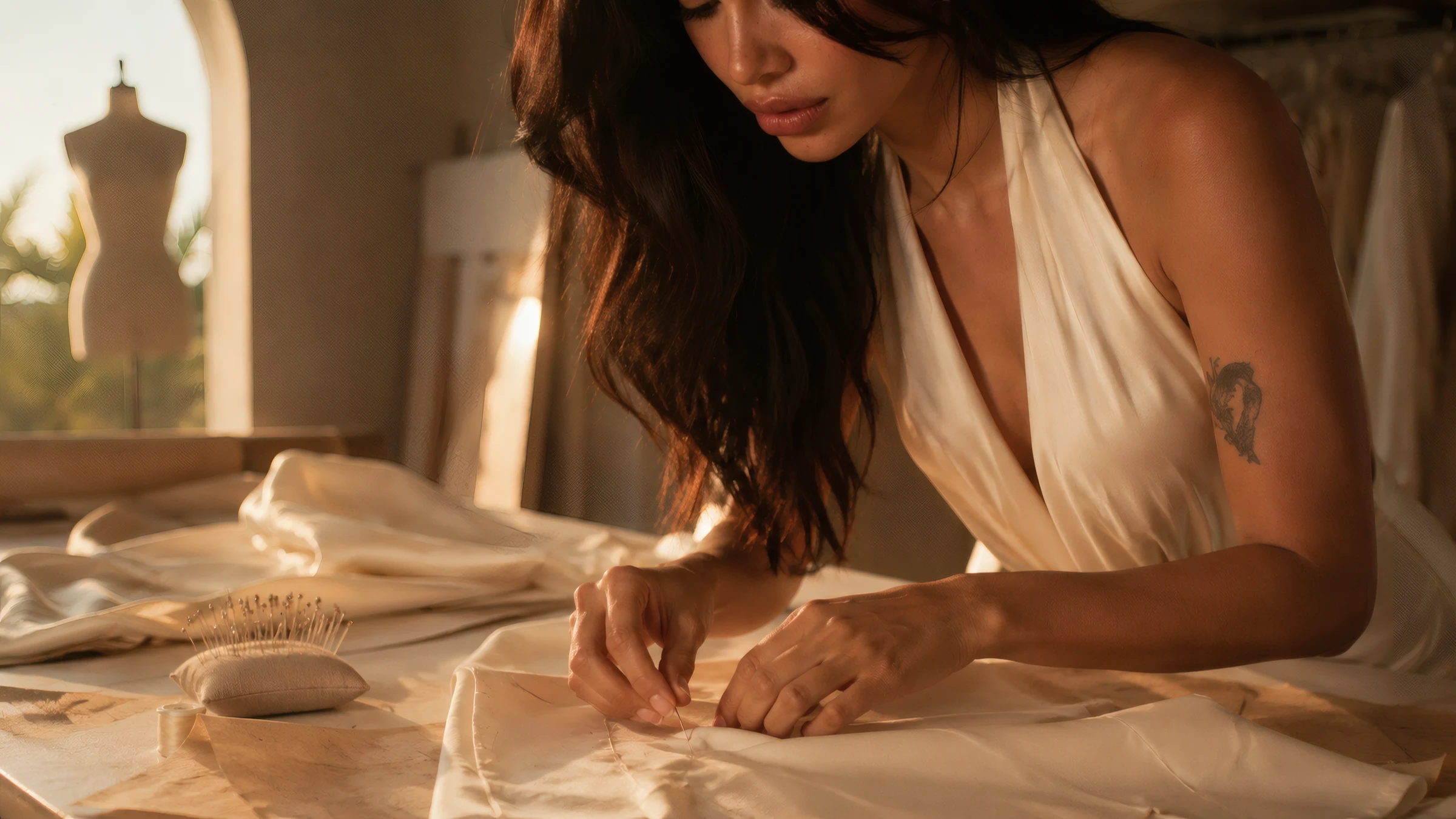
Then comes the fitting, the heart of couture. The toile is placed on the client's own body — or on a form padded to her exact measurements — and the real work begins. The couturier pinches, pins, chalks and slashes the calico while it is on her, reading how it answers her particular frame: one shoulder fractionally lower, a longer waist, the way she actually stands. A first fitting corrects the architecture. A second refines it. A third, sometimes, simply confirms. Each time, the toile is marked, taken apart, and the flat pattern beneath it adjusted to match.
- The toile is a full calico version of the garment, made to be marked, corrected and discarded.
- Calico is chosen for its clear, honest grain and its low cost — you can cut into it without fear.
- Fittings happen on the client's body or an exactly padded form, never on a generic mannequin.
- Each fitting transfers corrections back to the paper pattern, which becomes the garment's true blueprint.
- Only when the toile is perfect is the pattern laid on the real cloth — the silk is cut once, correctly.
The pattern is the real garment
There is a quiet truth here that surprises people: in couture, the finished dress is almost a by-product. The real artefact is the corrected pattern — the paper record of one woman's body, refined through fittings into a precise map. From that map the silk is cut a single time, with total confidence. This is why a couture house keeps its patterns like archives. They are not instructions for a dress. They are portraits, in folded paper, of the women the house has dressed.
“We make the dress in calico so we can make our mistakes there. By the time we reach the silk, there are no mistakes left to make.”
Yaya, Founder & Creative Director
The toile at Maison YAYA
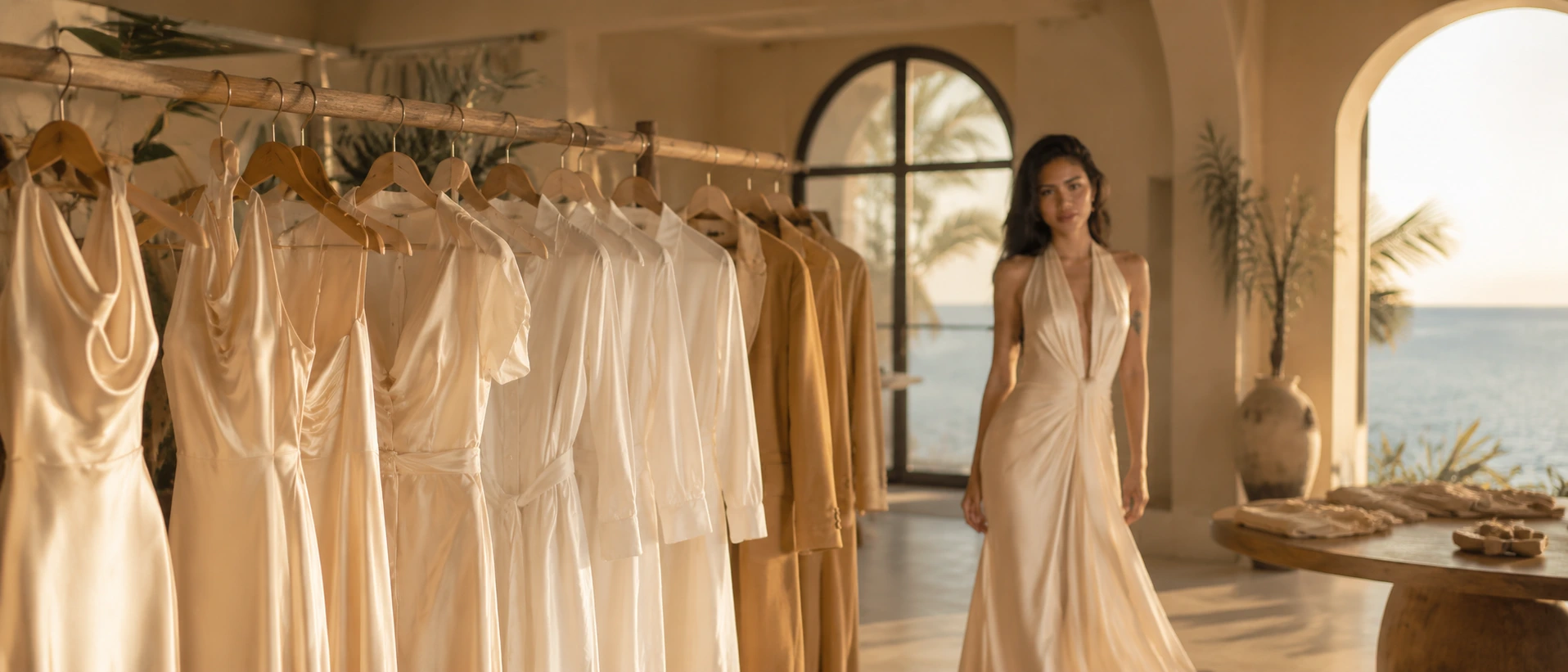
Though we are a ready-to-wear house, we hold to the toile without exception. Every new style is built first in calico and corrected on a live form before it earns its place in a collection — which is why our silk pieces fall true on the body rather than merely covering it. The toile is the discipline that keeps us honest. It forces us to solve a garment completely before we let it near the cloth our weavers in Surin spent weeks making. The ghost protects the gown.
If you ever visit the atelier in Phuket, ask to see a toile in progress. It is unglamorous, pinned and pencilled and rough at the edges — and it is the most important thing in the room.