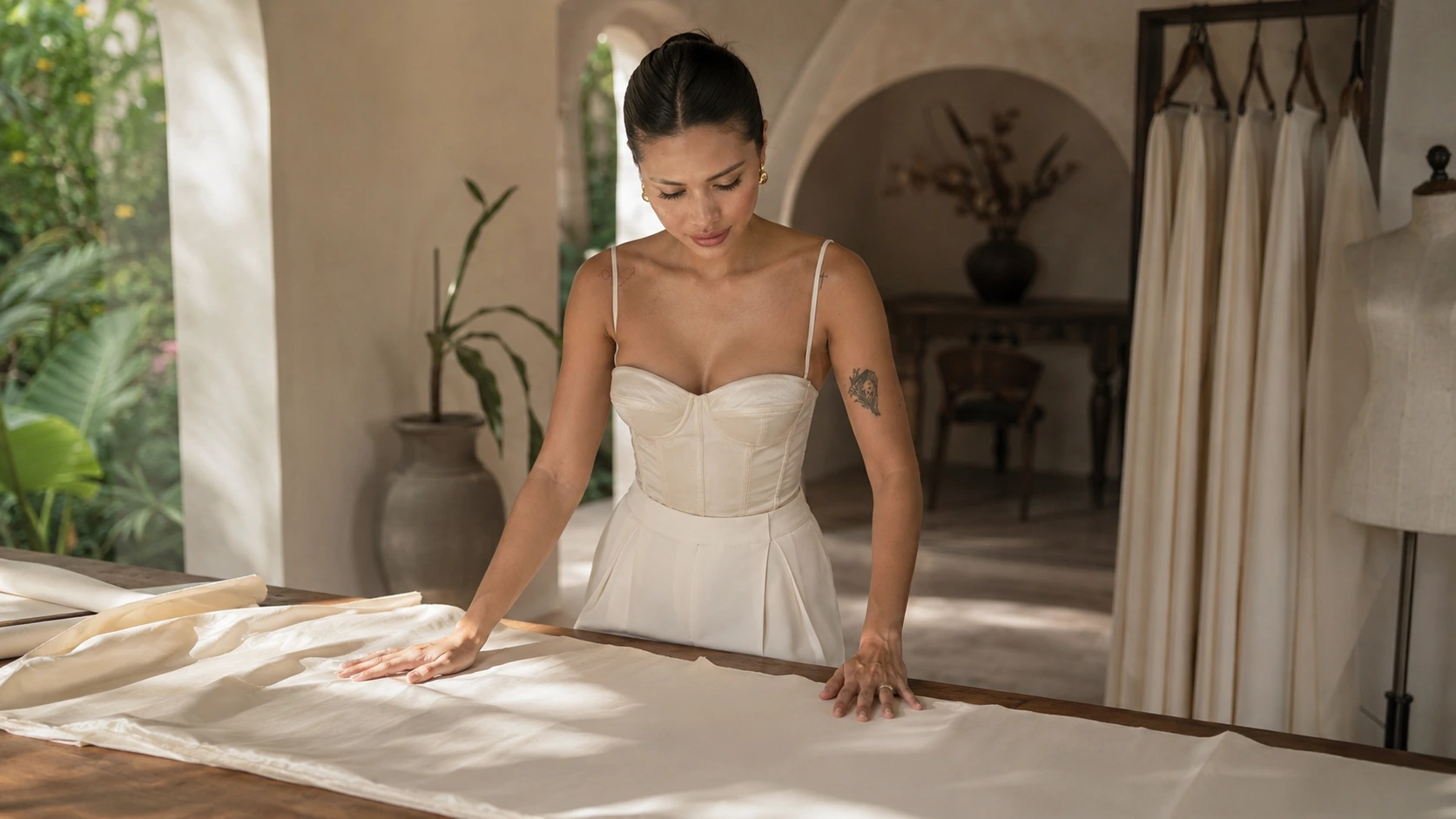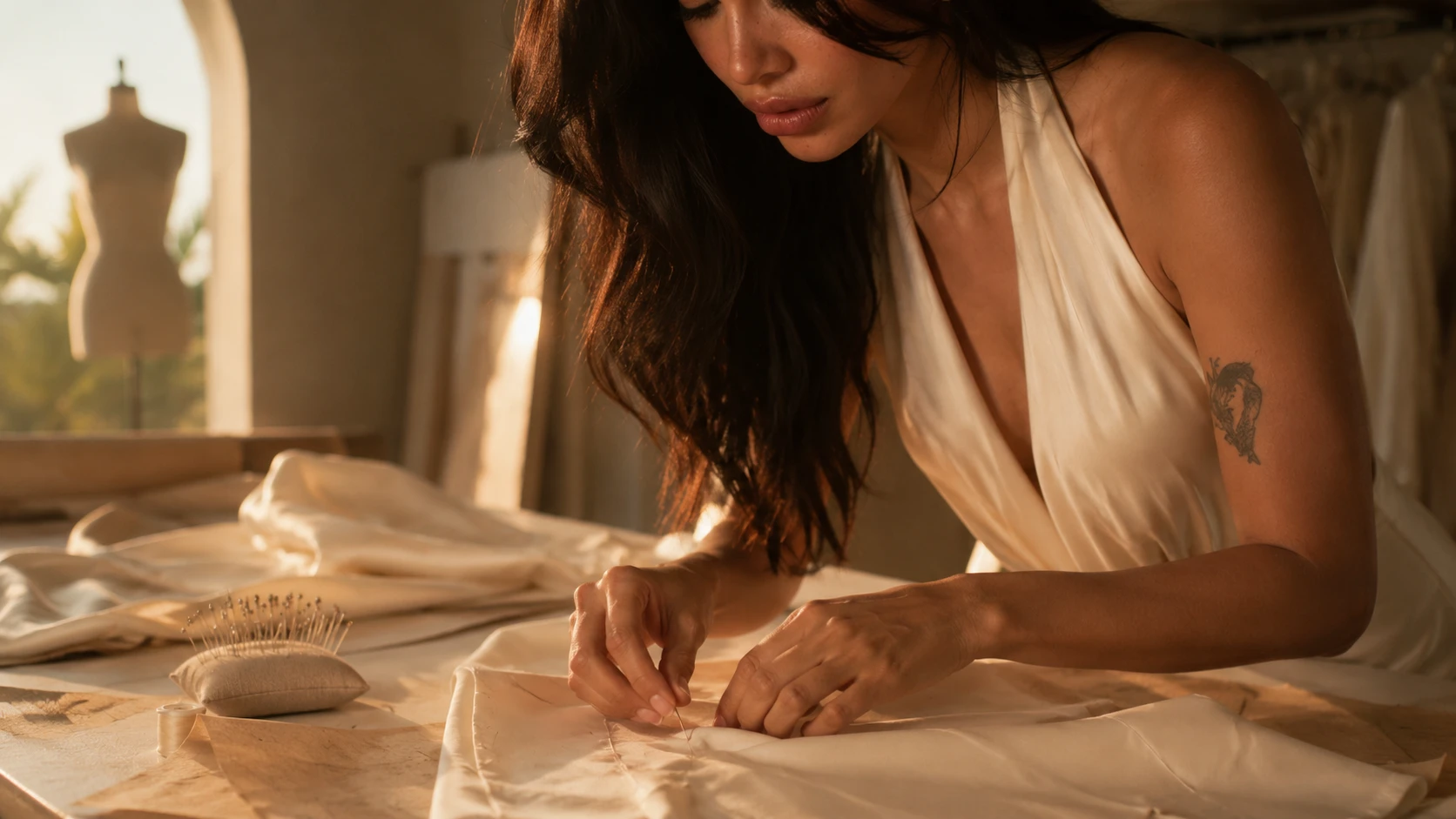
Cutting cloth is irreversible, so the atelier treats it as ceremony — truing the grain, resting the bias, reading the light before a single thread is severed.
Of all the acts in the making of a garment, only one cannot be undone. A stitch can be unpicked. A seam can be let out. A hem can be lowered. But a cut is final — the cloth severed is severed for good. This is why, in our atelier, the first cut is approached less like a task and more like a ceremony. Slowness here is not indulgence. It is insurance.
First, the cloth must rest
Fabric arrives at the table under tension, wound on a bolt, carrying the memory of how it was rolled. To cut it in this state is to cut a lie — it will relax later and your careful lines will shift. So before anything, we unroll the length and let it lie flat and unweighted, sometimes overnight, until it has forgotten the bolt and remembered only its own true rest. Bias-cut cloth is rested longest of all, because the bias stretches and recovers like something alive, and a gown cut from unrested bias will hang crooked within a week of wear.
Then, the grain must be told the truth
Truing the grain is the quiet, finicky heart of the ritual. The lengthwise threads and the crosswise threads must meet at a true right angle, or every line you cut will be subtly off, and the garment will twist on the body. We find a single crosswise thread, draw it gently from selvedge to selvedge, and cut along the channel it leaves. If the cloth has skewed, we ease it back square with steam and patient hands. Only when warp and weft agree do we proceed.
“I never let anyone hurry me to the shears. The cut takes a moment. The thinking before the cut takes the morning. That is the right proportion, and reversing it is how cloth gets wasted.”
Yaya, Founder & Creative Director
The pattern is laid with the cloth's permission, not against it
Laying the pattern is a negotiation between geometry and generosity. The pieces must respect the grain line, honour any nap or directional sheen, and — where the cloth has a weave or a print — flow so that the eye reads one continuous garment, not a collage of panels. On a striped or woven silk this can take an hour of shifting before a single chalk mark is made, because a stripe that fails to meet at the side seam is a flaw no amount of fine sewing can rescue.
The order of the ritual
When we teach a new cutter the ceremony, we teach it as a fixed sequence, because the discipline lives in the order:
- Rest the cloth flat and unweighted until it holds no tension from the bolt.
- True the grain so warp and weft meet at a perfect right angle.
- Lay the pattern with the grain, the nap and any pattern repeat, never against them.
- Chalk every line cleanly, then step back and read the whole layout once more in good light.
- Pause. Breathe. Only then open the shears — and cut in one confident pass, never sawing.
Why the pause matters most
The pause before the shears close is the most important moment in the whole sequence, and the easiest to skip. It is the last instant in which everything is still possible — when the cloth is whole and the garment is still only an idea. We hold that instant deliberately. It is the cutter's final chance to catch a misread grain, a stripe gone astray, a pattern piece flipped the wrong way. After this, there is only commitment.
There is something almost devotional in cutting this way, and we make no apology for it. The cloth was grown, reeled, woven and dyed by many hands over many months. To cut it carelessly would dishonour all of them. The ritual of the first cut is, in the end, simply respect made into method.