The journey from a pencil croquis to the first calico toile — how a flat idea is translated into three dimensions, and why the first version is meant to be wrong.
A sketch is a wish. A toile is the first time that wish has to answer to gravity, to the body, to the stubborn honesty of cloth. The passage between the two — from a line on paper to a garment standing on a stand — is the least glamorous and most decisive stretch of the whole creative process. It is where a design discovers whether it can actually exist.
The sketch promises; it does not deliver
A fashion sketch, by tradition, lies a little. The figure is drawn elongated — eight or nine heads tall against a real body's seven and a half — to make the clothes hang with an idealised grace. The sketch captures attitude, proportion, the feeling of a garment. What it cannot capture is how a real shoulder will take a sleeve, how a real waist will gather a skirt, how the cloth will actually fall. Those are questions only the toile can ask.
The pattern is the translation
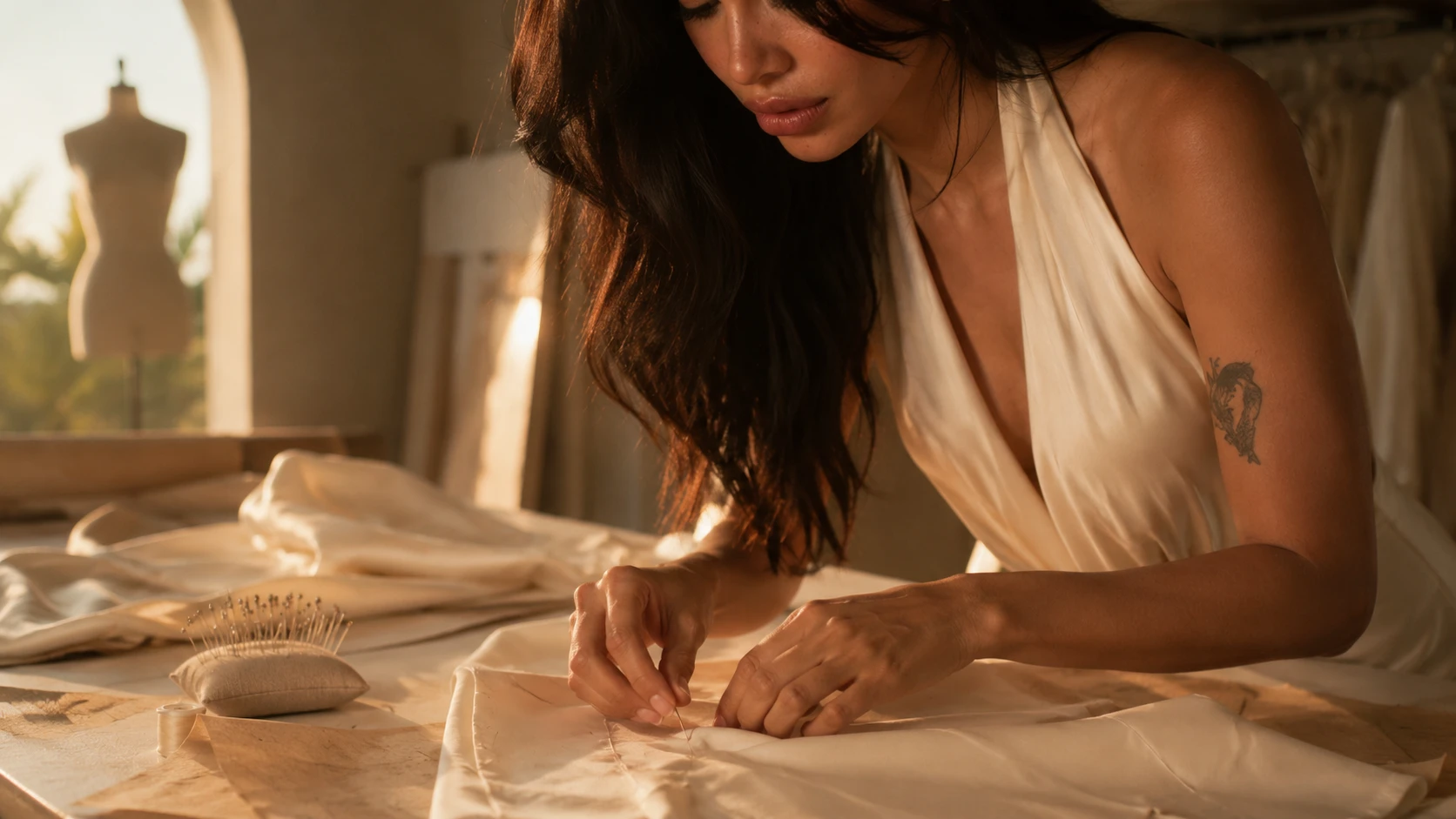
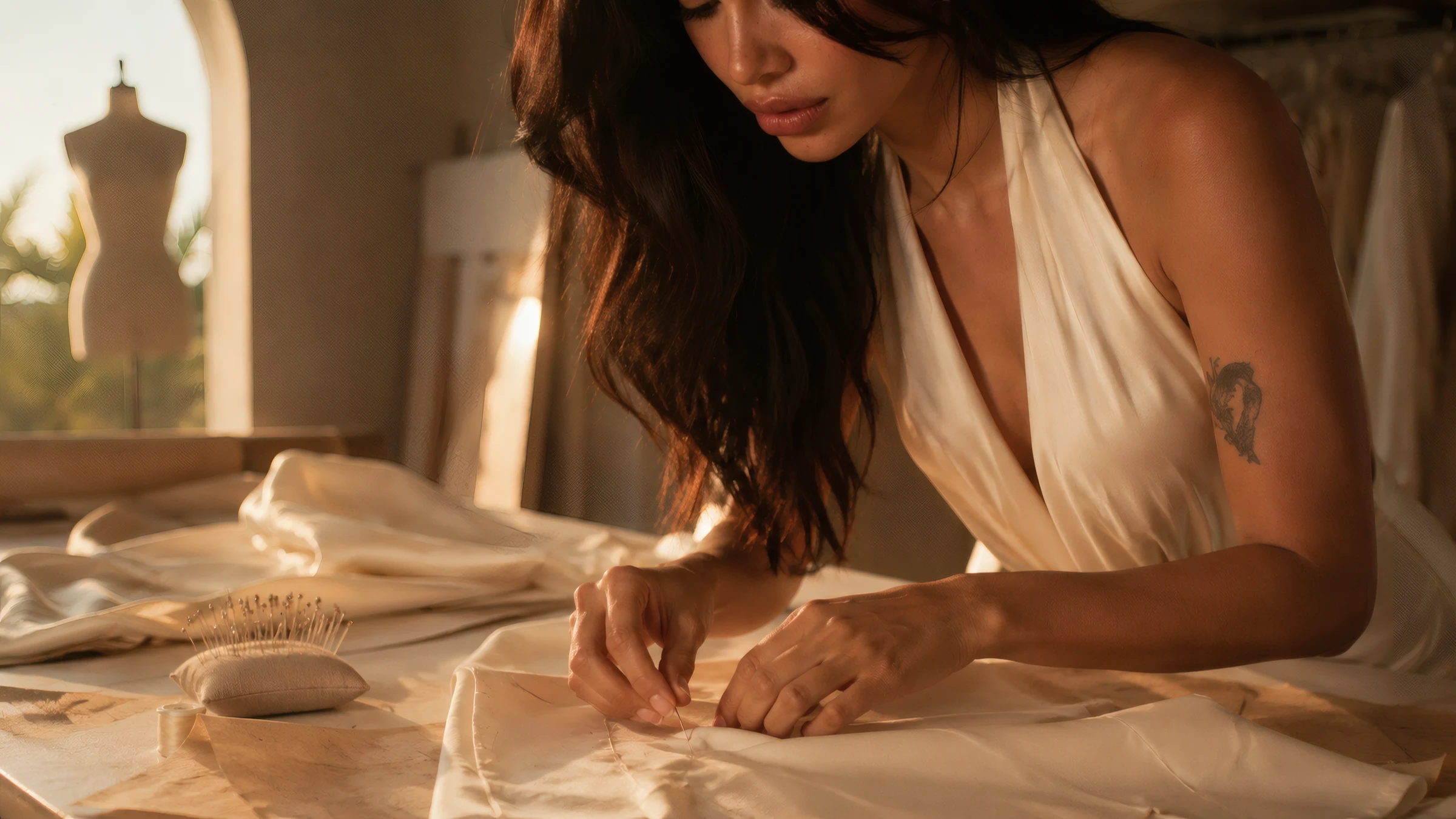
Between the drawing and the toile sits the pattern, and the pattern is where a two-dimensional idea is translated into the flat shapes that will wrap a three-dimensional body. There are two roads to it. Flat patternmaking builds the shapes on paper from measurements and rules. Draping — moulage — pins cloth directly onto a stand and discovers the shapes by hand. Most of our designs use both: a drape to find the idea, a flat pattern to make it repeatable. Either way, the pattern is a kind of unfolding — the body's roundness flattened into pieces that can be cut and then sewn back into roundness.
“I have learned never to fall in love with a sketch. I fall in love with the first toile, if it deserves it — and most of the time the first toile tells me the sketch was lying to me.”
Yaya, Founder & Creative Director
Why the first toile is made in humble cloth
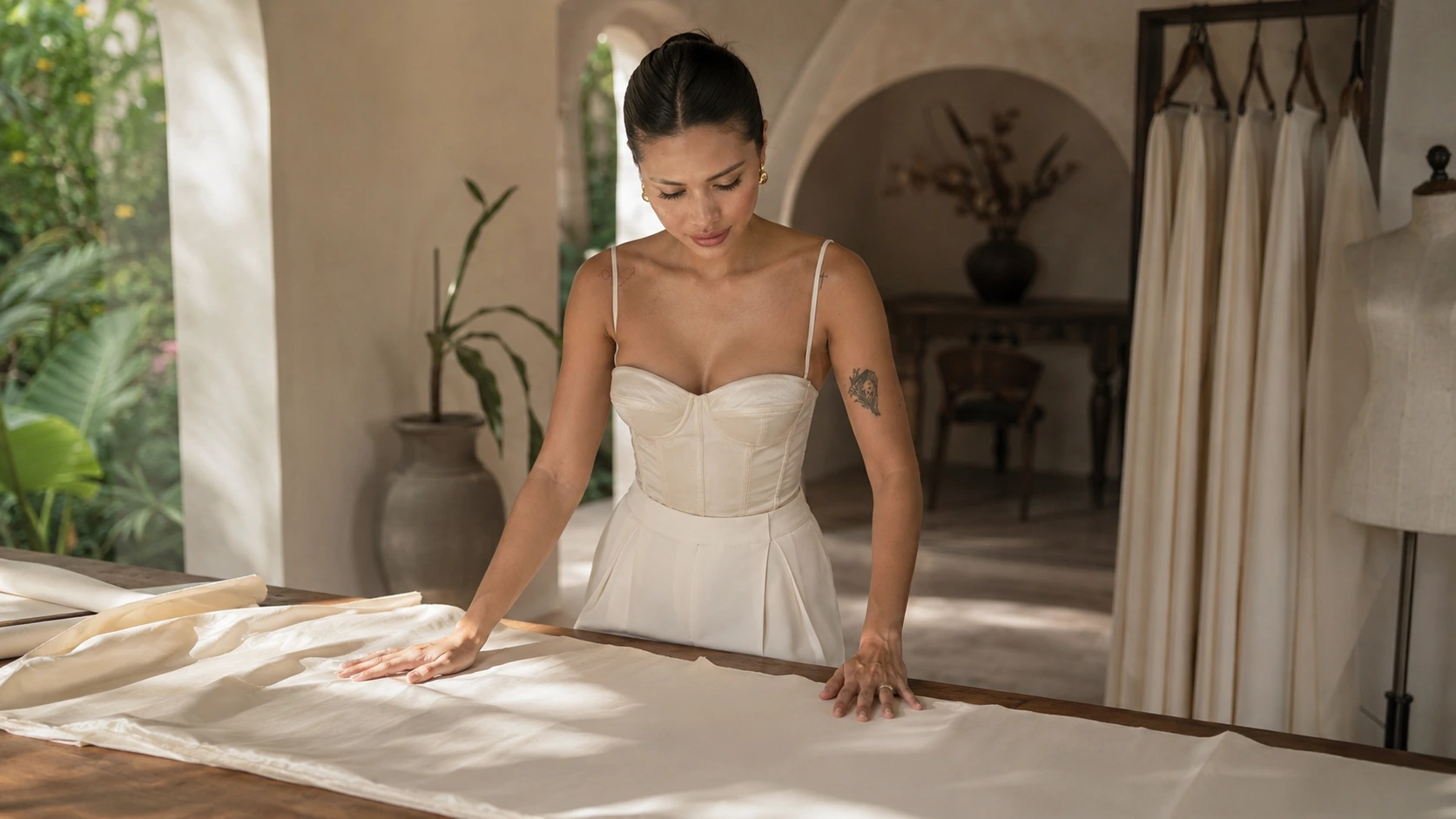
The first toile is cut not from precious silk but from calico — plain, cheap, unbleached cotton, chosen precisely because it does not matter. You cannot learn from a toile you are afraid to cut into. The whole purpose is to make mistakes early, in cloth you can scribble on, slash, repin and discard. To make a first toile in silk would be like rehearsing a play in full costume on opening night: the cost of being wrong becomes too high to risk being honest.
What the toile reveals that the sketch hid
Set the calico on the stand and the design begins to confess. The toile shows, brutally and usefully, everything the paper concealed:
- Whether the proportions that looked elegant on an elongated figure still read well on a real one.
- Where the cloth pulls, strains or pools — the places a seam must be moved or a dart re-angled.
- How the garment behaves in motion, when the wearer sits, reaches and turns, not just when she stands still.
- Whether the idea is, in the end, wearable at all — sometimes the most beautiful sketch makes a toile that simply cannot be worn.
Correcting in calico, in red and blue
A toile is meant to be marked up like a manuscript in edit. We pin and chalk and draw new lines straight onto the cotton — traditionally a corrected seam in one colour, a new dart in another — so the changes can be read back into the paper pattern. A toile may go through three, four, five versions before the design is right. There is no failure in this. The versions are the work. A design that reaches its final cloth without having earned its corrections in calico has almost certainly skipped a lesson it will pay for later.
Only when the toile stands correct — when the proportions hold on a real body, when the cloth falls without strain, when the garment moves with the wearer — do we cut at last into the silk. By then the design has stopped being a wish and become a plan. The sketch began it; the toile made it true. The most important version of any Maison YAYA garment is the one no customer will ever see.