How natural northern light, the raking dusk and the honesty of shade shape every decision in the atelier — from colour matching to the final fitting.
Ask most people what a couture atelier needs and they will list shears, silk, skilled hands. Few will say light. Yet light is the medium in which every other decision is made — the one tool you cannot buy, cannot replace, and cannot fake. An atelier is, before anything else, a room chosen for how the day moves through it.
Why the cutting tables face the cool light
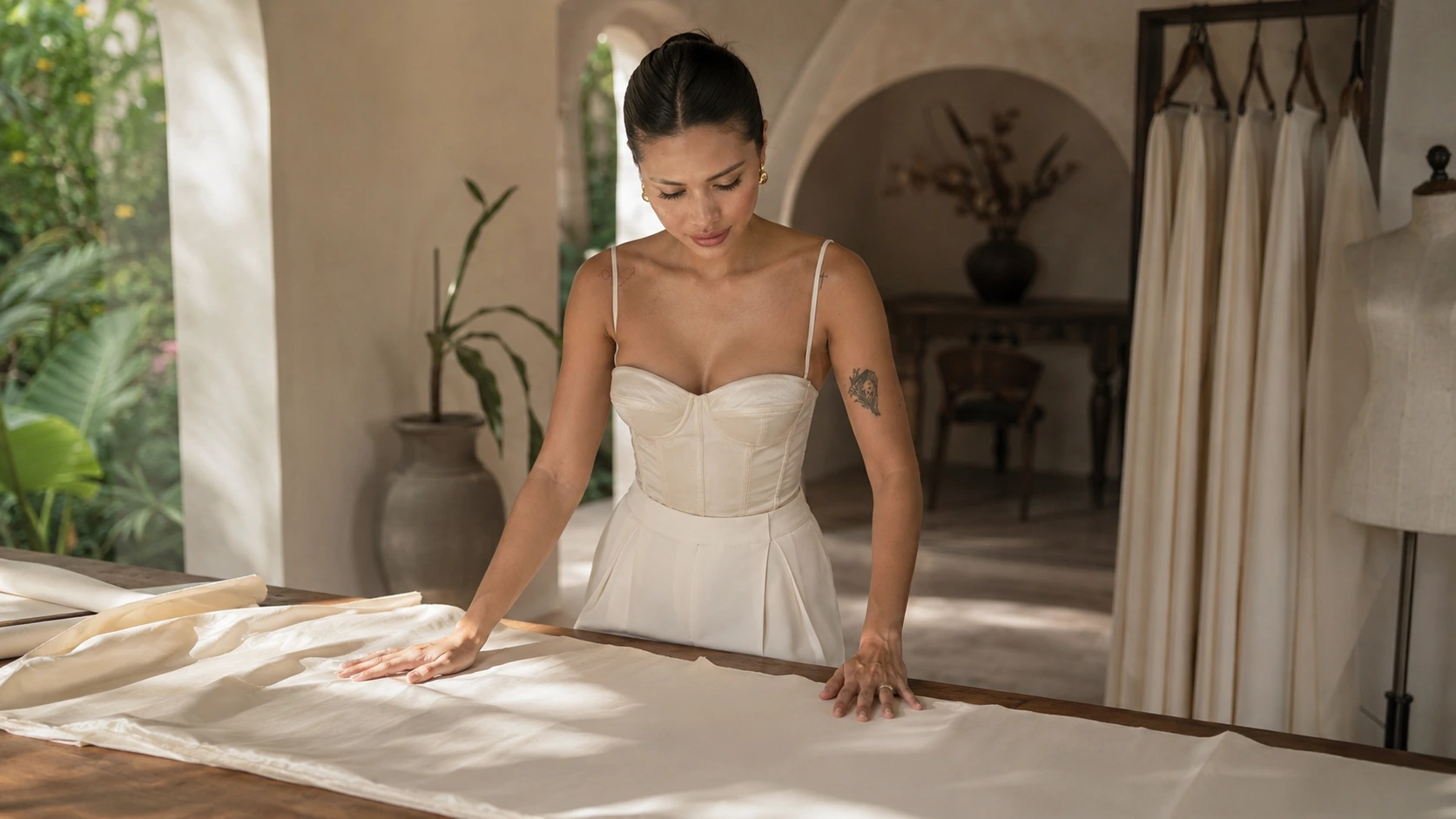
Our cutting tables are placed to receive the steady, cool, indirect light of the shaded side, never the direct glare of the sun. There is a reason couture houses the world over have prized this kind of light for centuries: it is even, it casts no harsh shadow, and it does not shift in temperature as a cloud passes. Under such light a colour stays itself. A pale ivory does not flash gold one moment and grey the next. The cutter can trust what she sees, and trust is the whole job.
Colour is a conversation with light
No colour exists on its own. It exists only in the light that lands on it, and the same silk can read as three different shades across a single day. This is why we match colour only under consistent natural light, and never under the warm cast of a lamp that would flatter a cream into something it is not. A dye that matches its swatch under an evening bulb may betray you completely at noon. Light is the truth-teller, and we defer to it absolutely.
“I trust the light before I trust my own eyes. If a seam looks right to me but wrong in the five o'clock sun, the sun is correct and I am tired.”
Yaya, Founder & Creative Director
The raking light that reveals every flaw
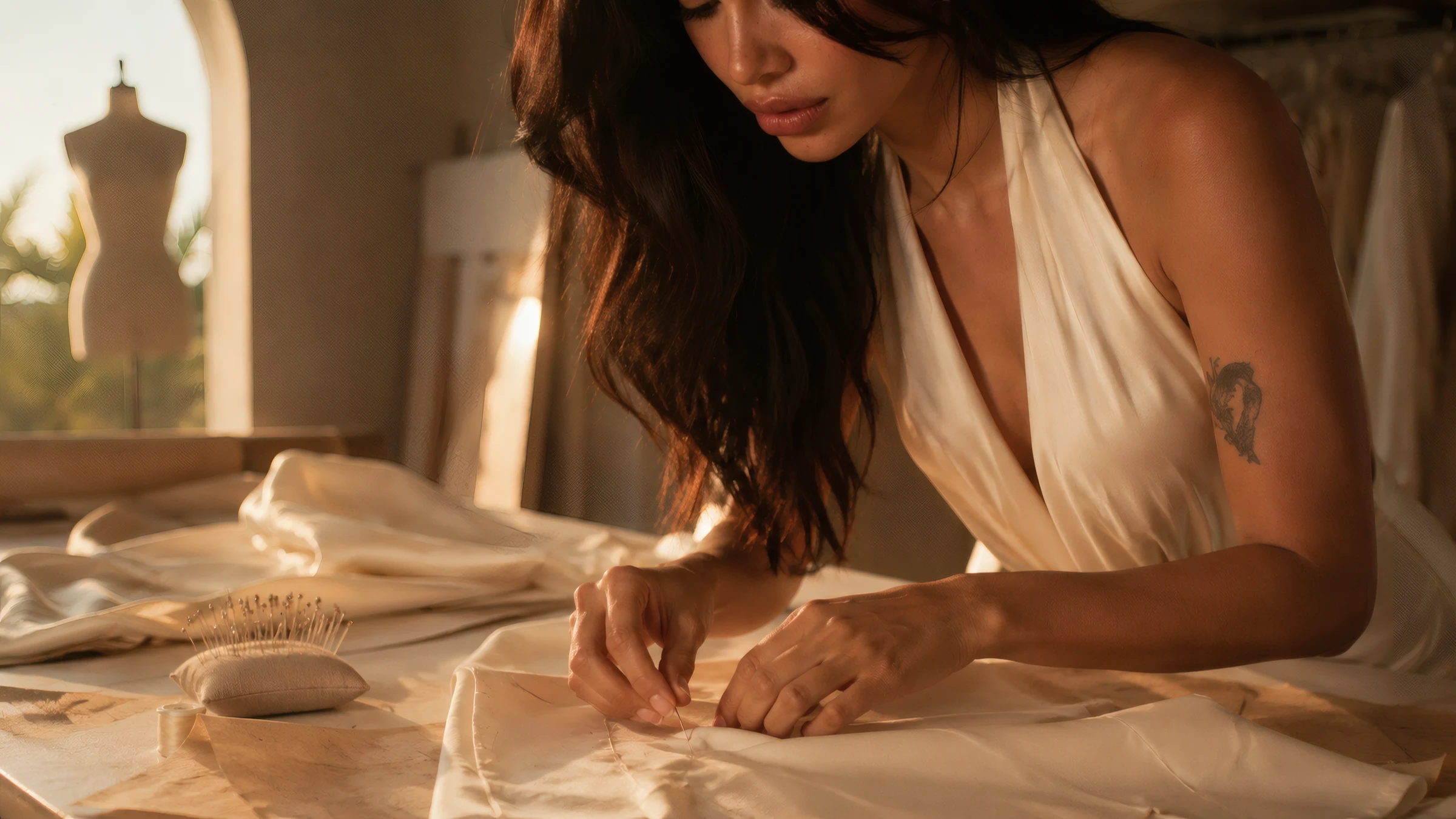
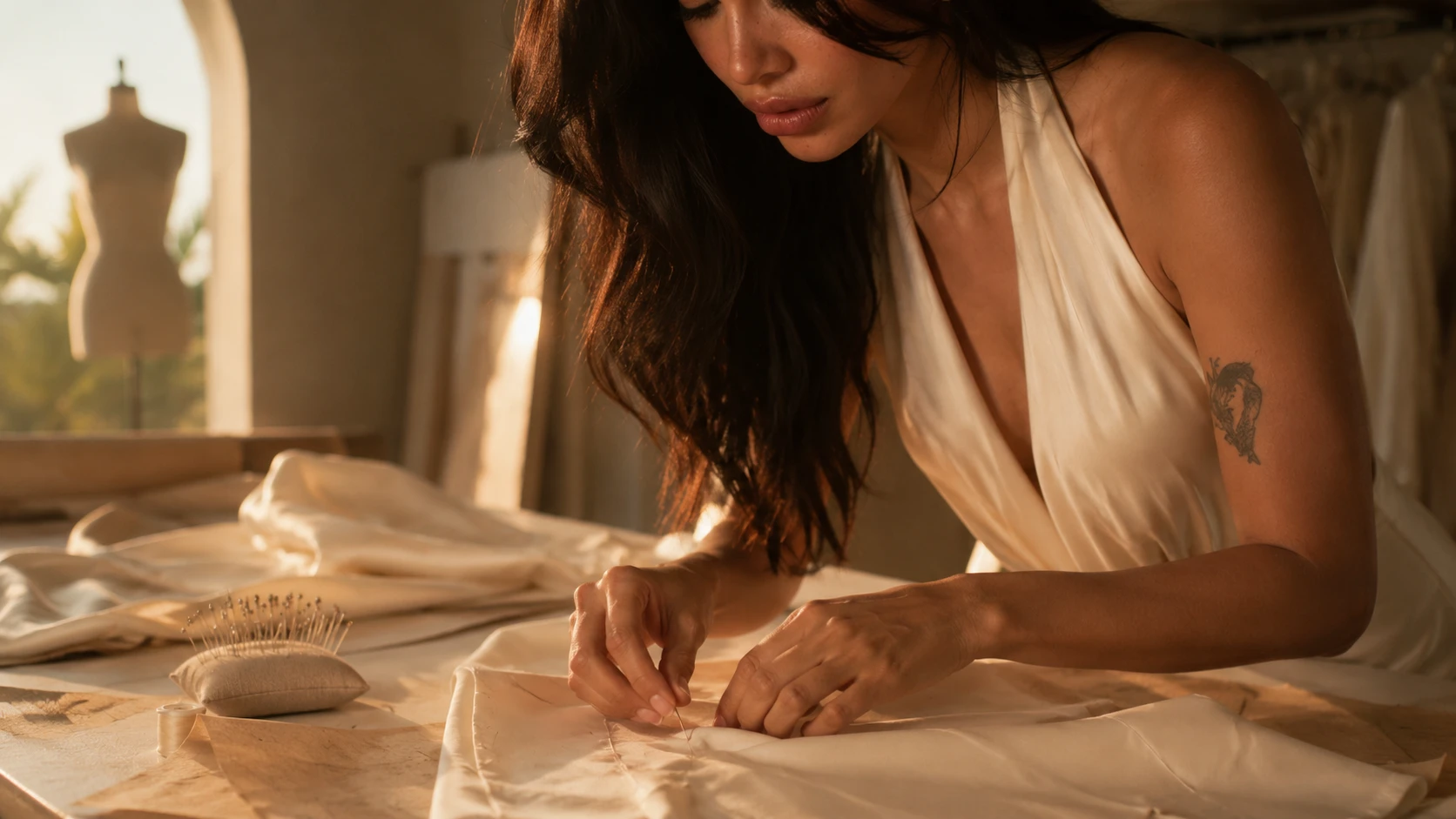
Low, sidelong light — the raking light of early morning and late afternoon — is the atelier's most ruthless ally. Where overhead light flattens a surface and hides its sins, raking light skims across the cloth and throws every imperfection into relief: a hem a fraction uneven, a seam that puckers, a dart that pulls. We hold finished pieces deliberately in this light precisely because it is unflattering. What survives the raking light has nothing left to hide.
How we work with the day
Because light is a tool we cannot command, we organise the working day around it rather than against it:
- Cutting and grain work happen in the steady cool morning light, when colour and line read most truly.
- Colour matching is done only under consistent natural daylight, never under artificial warmth.
- Close handwork is positioned to catch even, indirect light so the eye is never strained by shadow.
- Fittings are held at dusk, in the long raking light that reveals the truth of every seam.
- When the natural light fails, we stop the decisions that depend on it. Some work simply waits for tomorrow.
The discipline of waiting for the light
Perhaps the hardest discipline in the atelier is knowing when not to work. There are tasks we will not finish under electric light, however pressing the deadline, because the eye cannot be trusted under it. To approve a final hem at nine in the evening is to gamble on a verdict the morning may overturn. So we wait. The light will return, as it always does, and the work it judges will be the better for our patience.
An atelier without good light is a kitchen without taste — it can go through every motion and still get the result wrong. We chose our rooms for their windows before we chose them for their floor space, and we have never regretted it. The light is free, it is unbuyable, and it is the most exacting critic we have.