Luxury once meant excess. We argue it should mean responsibility — that true rarity today is a beautiful thing made well, fairly, and without hidden cost.
Luxury has a long and uneasy history. For most of it, the word meant excess — more than one needs, more than is reasonable, a surplus worn as proof of standing. To speak of ethical luxury can sound, at first, like a contradiction in terms. And yet the idea will not leave us alone, because there is something in genuine beauty that resists being built on harm. A maison that loves what it makes must eventually ask what its making costs, and whether that cost can be borne honestly.
From conspicuous to conscientious
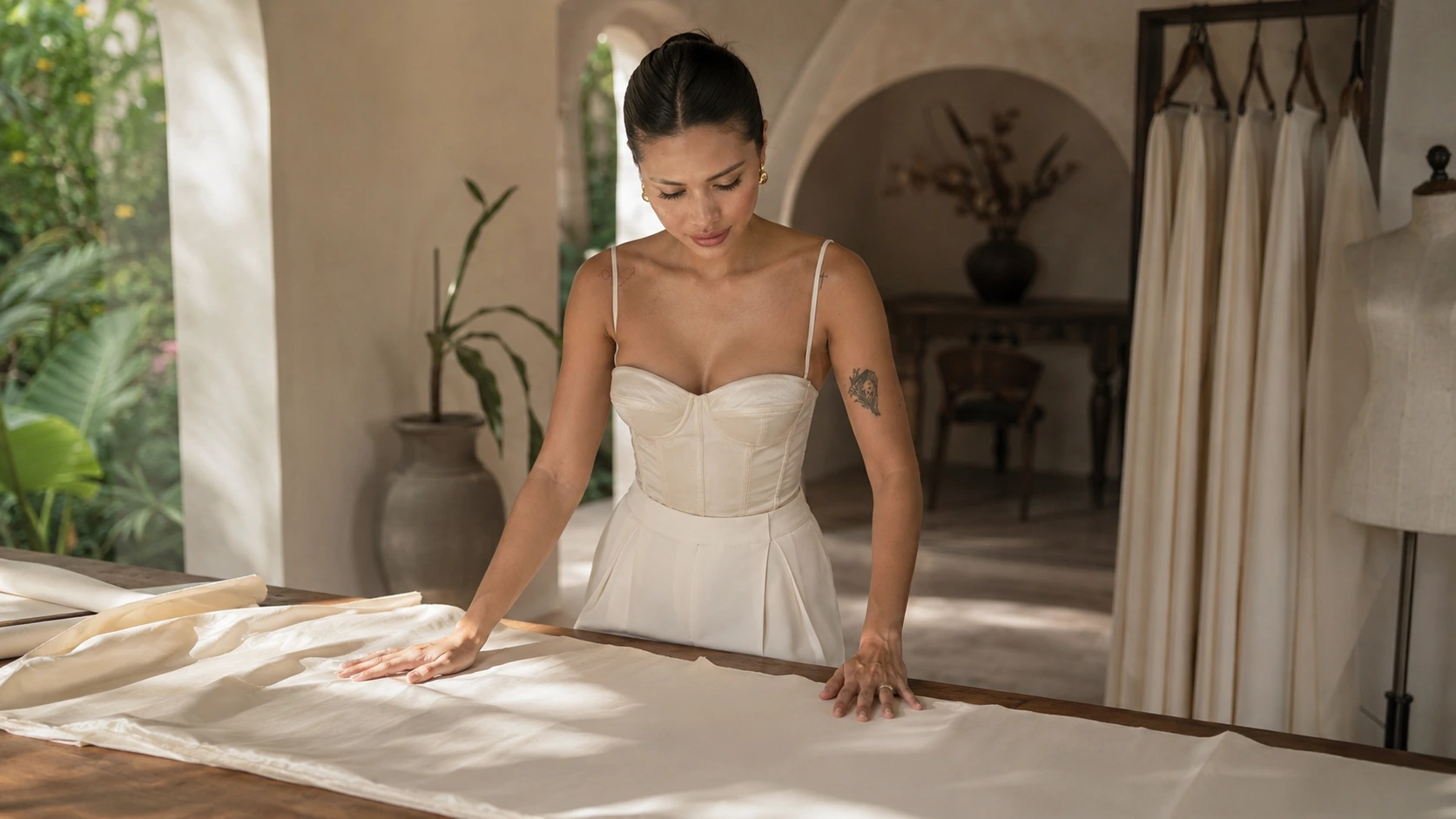
The old luxury announced itself loudly — logos, volume, the visible spending of money. The new luxury, the one worth defending, is quieter and more demanding. It locates rarity not in scarcity manufactured by a brand but in things that are genuinely difficult to do well: cloth woven by hand, colour drawn from a plant, a garment whose every maker was paid and treated as a person. In a world that can produce anything cheaply, the truly rare object is the one produced rightly.
“Anyone can make a thing expensive. The discipline is to make it expensive for the right reasons — because no part of its cost was hidden in a person, a river, or a lie.”
Yaya, Founder & Creative Director
What an ethical luxury actually owes
It is easy to attach the word ethical to a garment and difficult to deserve it. The deserving lives in a set of obligations that a maison either meets or quietly does not.
- To the maker — a fair wage, safe work, and the dignity of being named rather than hidden inside an anonymous chain.
- To the earth — natural fibres, gentler dyes, water returned rather than poisoned, and a refusal to overproduce.
- To the buyer — honesty about what a thing is, how it was made, and what its real price reflects, free of invented scarcity and manufactured fear.
- To the garment itself — construction good enough that it deserves the long life ethics requires of it.
The quiet luxury of a clear conscience
There is a pleasure in a beautiful object that knowledge can deepen or destroy. A gown loses something the moment you learn it was made in cruelty; it gains something when you know the woman who dyed it by name and the village where her indigo grew. This is the part of luxury that no thread count can supply — the comfort of wearing a thing whose whole story you would be content to tell. Beauty and conscience, it turns out, are not opposed. They make each other complete.
Where Maison YAYA stands
We do not claim to be without footprint — no one who makes physical things honestly can claim that. We claim something more modest and, we hope, more useful: that we know our footprint, that we work to shrink it, and that we hide none of it from you. We make little. We make it to last. We pay the people who make it with us, and we name the place it comes from. That is our definition of luxury, and we believe it is the only one with a future.
The question that opened this piece — whether beauty can be made without harm — does not have a perfect answer, and we distrust anyone who says it does. What we can offer is beauty made with far less harm, made openly, and made to be kept. In an industry built on haste and concealment, that turns out to be the most luxurious thing of all.