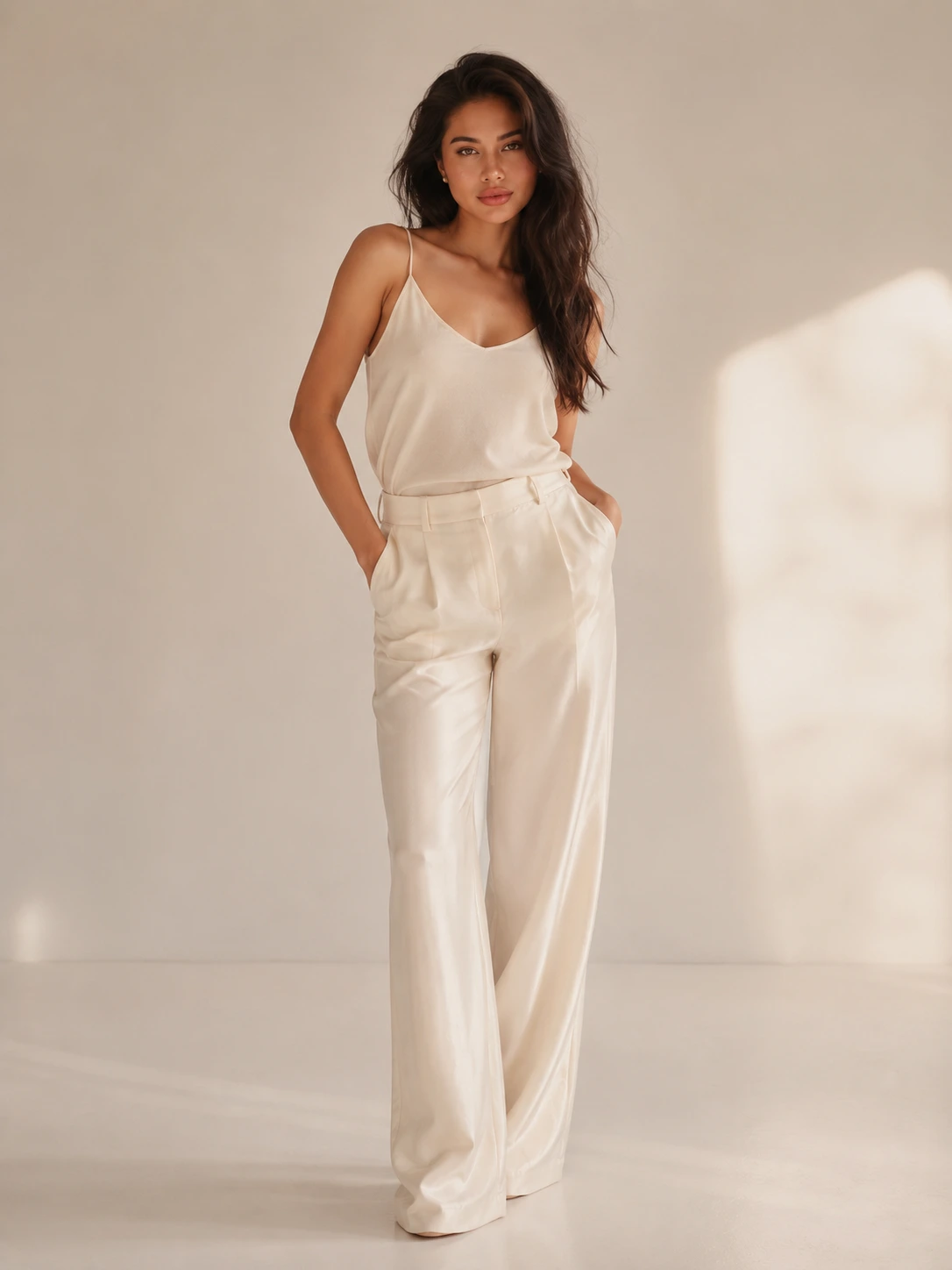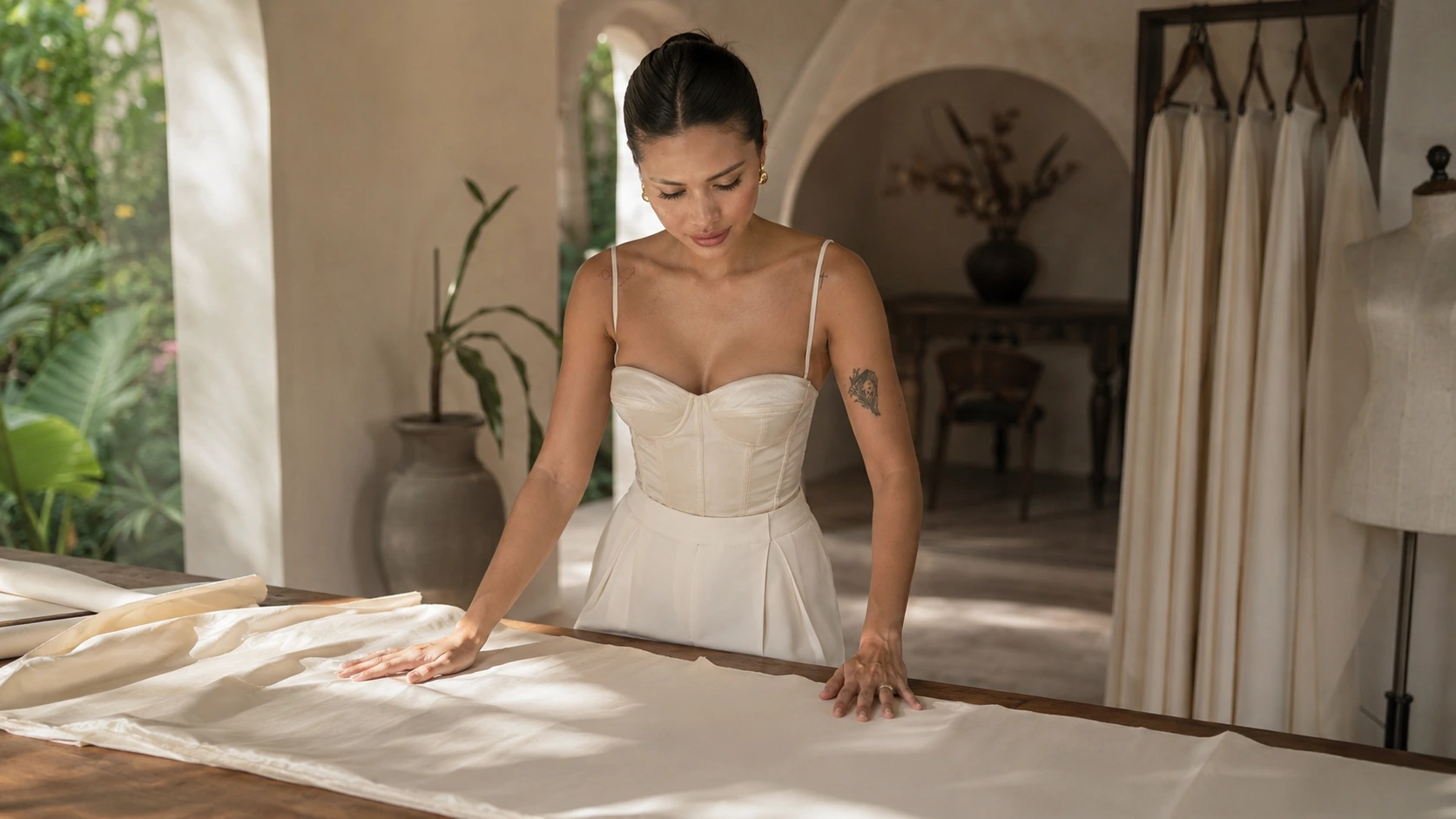
What separates a dress your daughter could wear from one that fails by winter? A look inside the construction that lets a garment outlive a trend.
There is a test, quiet and unforgiving, that no campaign can pass on a garment's behalf: time. A dress either survives a decade of wearing or it does not, and almost everything that decides the outcome is invisible on the rail — sewn inside the seams, hidden in the choice of fibre, present in the parts you cannot see and absent in the ones you can. A garment built to be inherited is built in places the eye never reaches.
The fibre decides first
No amount of fine sewing rescues a poor cloth. Natural fibres of long staple — true mulberry silk, fine merino and cashmere, long-fibre linen and cotton — age into themselves; they soften, they drape more truthfully, they forgive a decade of wearing. Short-fibre and synthetic blends do the opposite. They pill, they thin, they hold creases like grudges and lose their shape after a season. Before a single stitch is considered, the lifespan of a garment has already largely been written in the choice of thread it is woven from.
“I design as though the woman buying the dress will one day give it to someone she loves. It changes every decision — the seam, the hem, the buttonhole. Nothing is allowed to be temporary.”
Yaya, Founder & Creative Director
The construction that buys you decades
Inside a garment made to last is a set of quiet, costly choices, each of which a faster maker omits to save a few minutes and a few cents.
- Generous seam allowances — extra fabric folded inside the seam, so the garment can be let out, taken in and altered for a changing body across years.
- French or bound seams that enclose every raw edge, so the fabric cannot fray its way to failure from the inside.
- Natural fibre thread matched to the cloth, which ages and wears at the same rate as the garment rather than cutting through it.
- A structured piece built on a hand-stitched canvas rather than glued fusing — glue stiffens, bubbles and dies; stitched canvas moulds to the body and lasts.
- Buttonholes and buttons sewn by hand with a shank, reinforced to take the strain that the cheapest part of a garment is usually first to lose.
How to read these things on the rail
You need no atelier to judge a garment's future. Turn it inside out — the inside tells the truth the outside is selling. Look for enclosed seams and clean finishing where no one was supposed to look. Tug gently at a button; feel whether a structured jacket moves with a living spring or sits dead and flat. Check the seam allowance with two fingers. A garment that was built to last does not hide its construction. It quietly invites the inspection.
Everything Maison YAYA makes is built to this standard, because longevity is the only sustainability that survives contact with reality. A garment kept for twenty years and passed onward is worth more to the earth than any certificate. We do not make clothes for the season. We make them, if we are honest, for the next person who will love them after you.