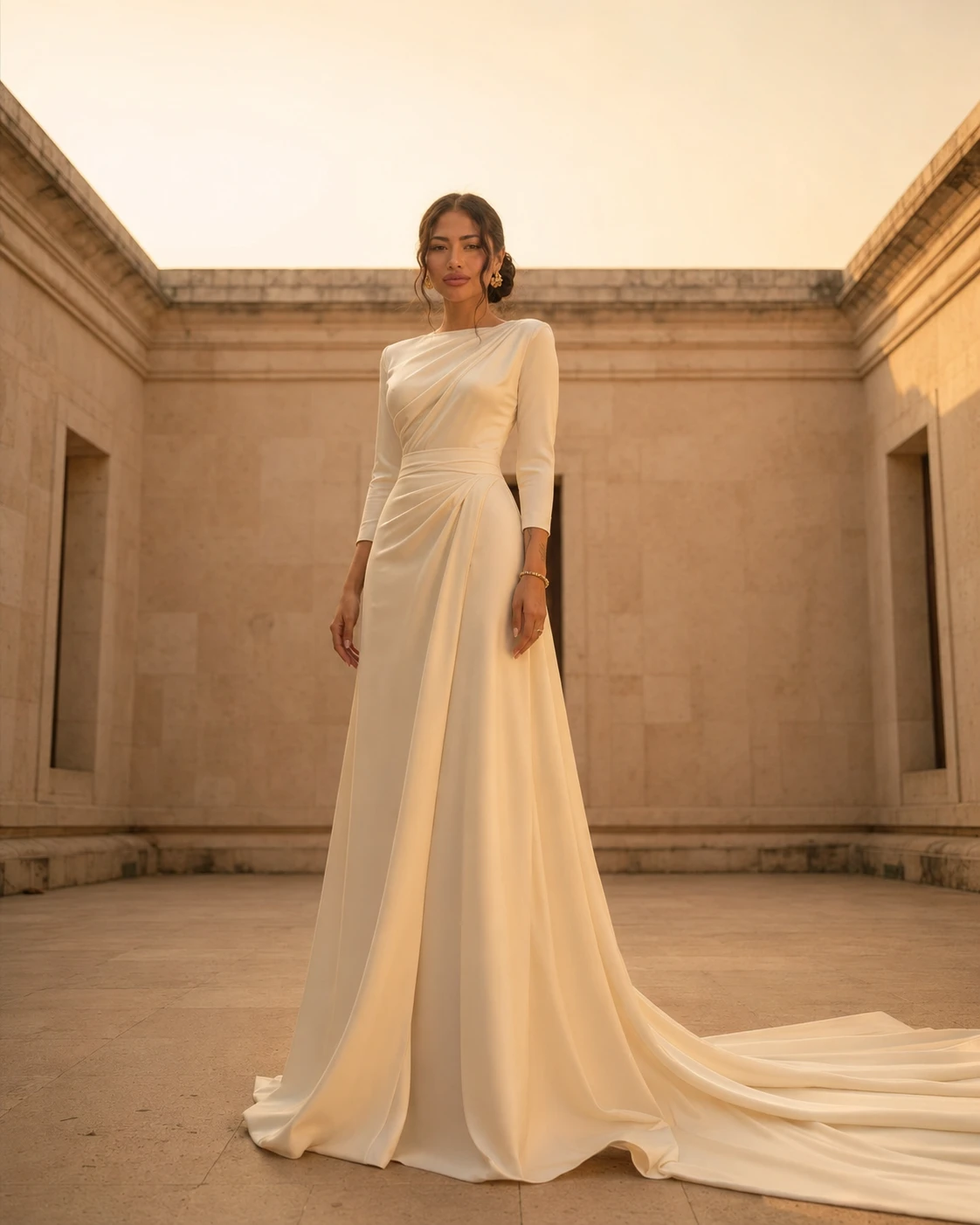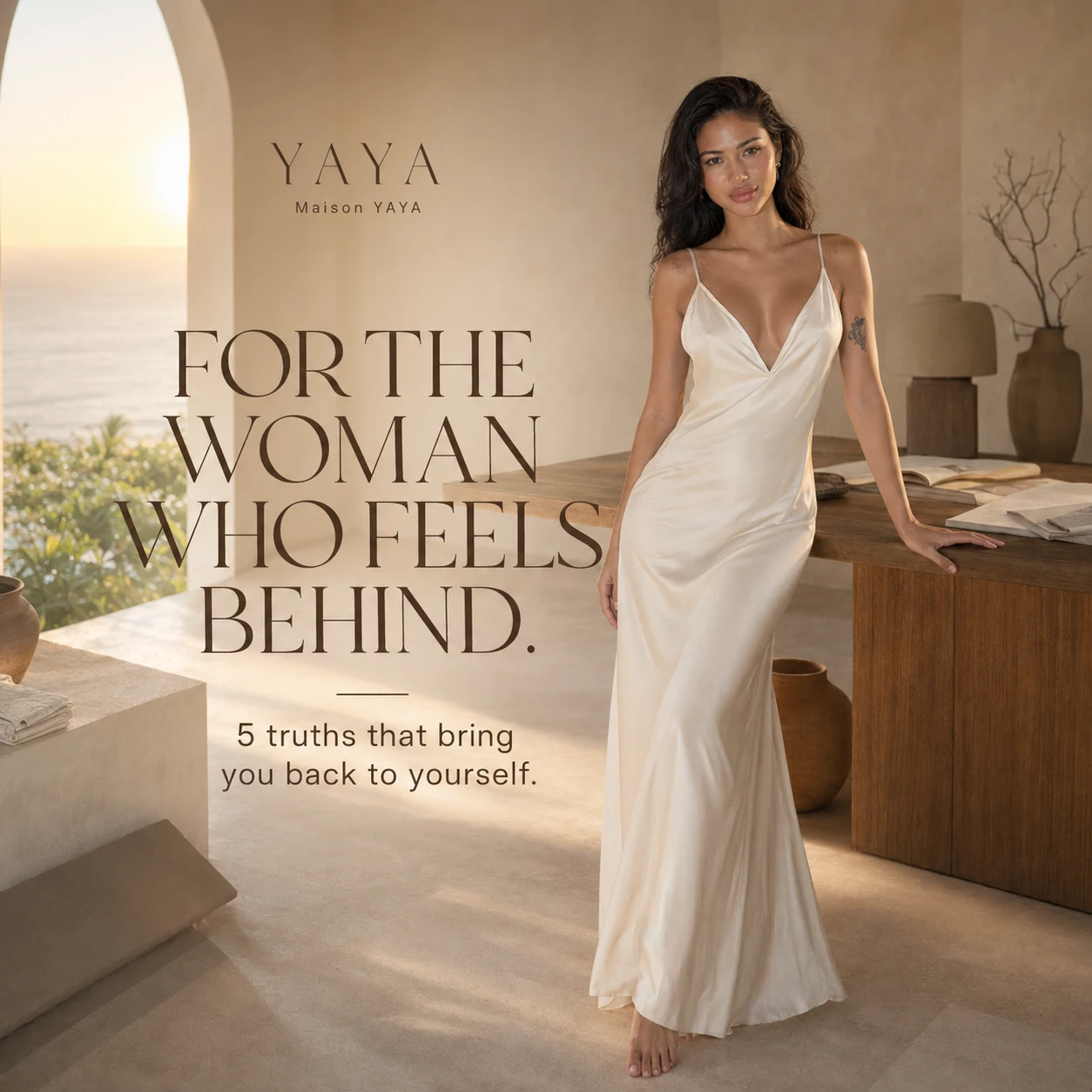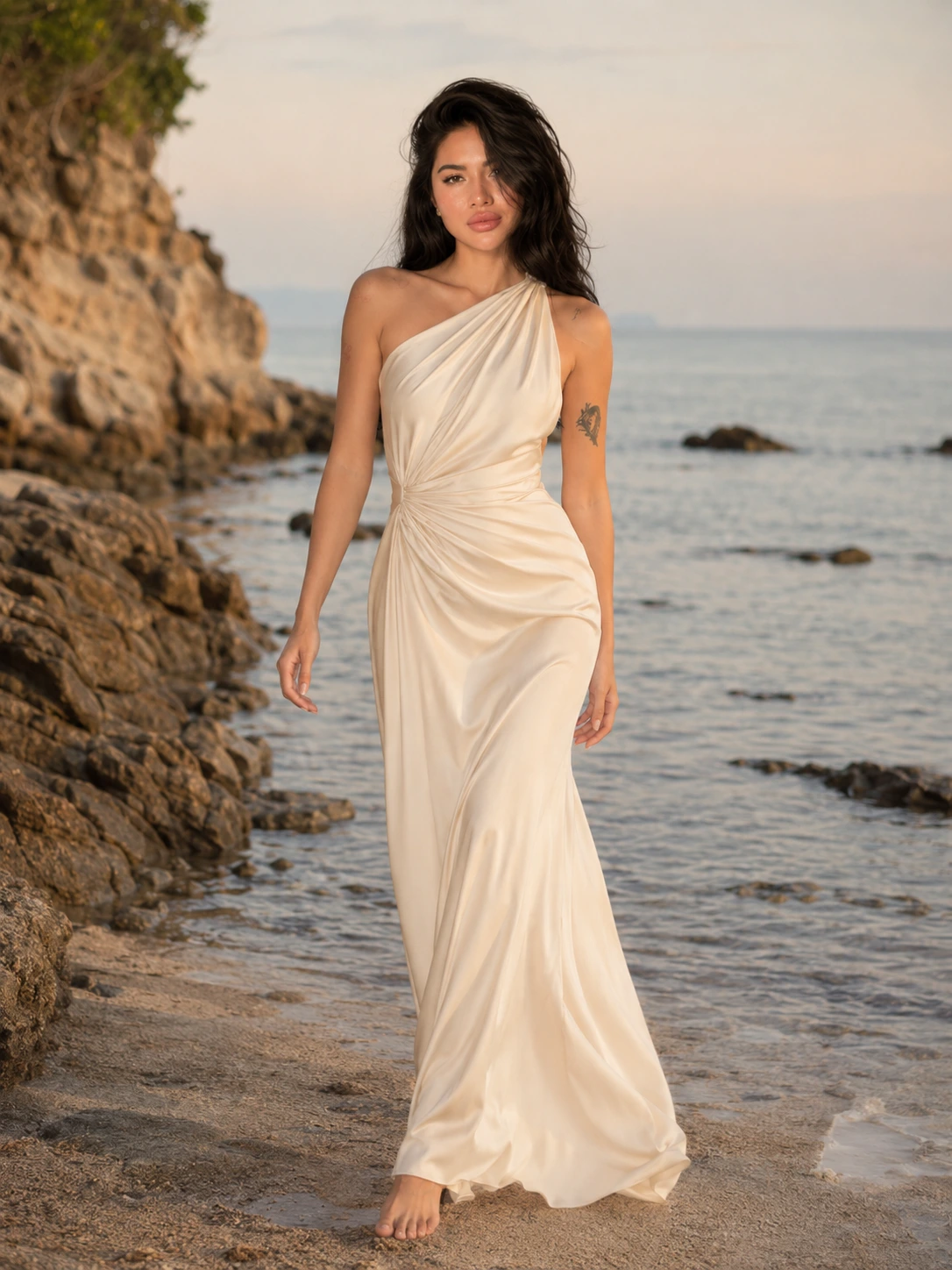
Before fabric, before colour, before a single seam — there is the line a garment cuts against the air. A study of silhouette and why it carries a whole design.
Stand a woman in a doorway with the light behind her and reduce everything to shadow. The colour is gone, the cloth is gone, the buttons and the stitching are gone. What remains — the outline against the brightness — is the silhouette, and it is the thing the eye reads first, from across a street, before any detail registers at all. A garment can be flawless in every seam and still fail here, in the only decision that is visible at a hundred paces.
The four shapes everything returns to
Strip fashion of its noise and almost every silhouette resolves into one of a few fundamental shapes, each carrying its own mood. The designer's first move is to choose which one the body will become.
- The column — a straight vertical line from shoulder to floor, the most elongating and the most serene; the shape of the slip dress and the narrow coat.
- The A-line — narrow above, widening below, all movement and ease, generous to the hip without insisting on the waist.
- The hourglass — defined at the waist, answered above and below; the most overtly feminine and the most demanding to balance.
- The cocoon — rounded, enveloping, the shoulder and hem drawn in while the middle breathes; quiet, modern, unbothered by the body it covers.
Why the silhouette comes before the cloth
It is tempting to begin with a beautiful fabric and let it suggest a shape, and sometimes a great length of silk does exactly that. But the discipline of design runs the other way. Decide the silhouette first, and the fabric becomes a means to achieve it: a column wants a cloth with weight and drape to fall true; a structured hourglass wants a cloth with body to hold the waist; a cocoon wants something soft enough to round without collapsing. Choose the shape, then find the material honest enough to keep it.
“I sketch the outline before I sketch anything inside it. If the silhouette is wrong, no detail will save the dress. If it is right, the dress is already half made.”
Yaya, Founder & Creative Director
The negative space is part of the line
Beginners draw the body and dress it. Designers draw the air around the body too. The gap between a sleeve and the waist, the way a wide trouser leaves a slice of light beside the ankle, the breath of space a cocoon coat holds at the hip — this negative space is as composed as the cloth itself. A silhouette is not only what the garment occupies; it is the shape it carves out of the room, and a confident design is as deliberate about the emptiness as about the fabric.
One silhouette, held with conviction
The most common failure in dressing is hedging — a little structure here, a little volume there, a waist suggested and then abandoned, so the eye never settles on a single statement. A strong silhouette is a single, committed line read cleanly from shoulder to hem. This is why the most elegant women often look, at a glance, almost simple: they have chosen one shape and trusted it entirely, and that conviction reads, even from across the street, as something close to certainty.
Learn to see the silhouette and you will never shop the same way again. You will hold a garment up and ask not what is this colour or how is it made, but what line does this cut against the light — and whether that line is one you wish to be, walking into a room, before anyone is close enough to know anything else about you at all.