How to store luxury clothing so it survives the years — the right hangers, why you should never use plastic, and the difference between a closet and an archive.
A wardrobe is not a place where clothes wait. It is a place where they age — well or badly, depending on how you keep it. The women whose clothes look new after a decade are not lucky. They have simply understood that storage is the longest phase of a garment's life, and the one most people give the least thought to.
The hanger is the foundation
A wire hanger is a small act of violence committed slowly. It concentrates the entire weight of a garment onto two narrow points at the shoulder, and over months it carves a permanent dimple into the cloth. Replace every wire hanger you own with broad, contoured wooden ones — or, for the most delicate pieces, padded satin hangers that spread the load across a curve. The hanger should follow the line of the shoulder seam, never extend past it.
- Tailored jackets and coats: wide wooden hangers with a curved shoulder, never folded.
- Knitwear, cashmere and any heavy weave: never hung. The weight stretches the shoulders into points. Fold and shelve.
- Silk slips and bias-cut pieces: padded hangers, or folded over a padded bar to protect against the cut-line a thin hanger leaves.
- Trousers: clipped at the hem from a trouser bar so they hang by gravity, the crease falling naturally.
Plastic is the enemy of natural fibre
The dry cleaner's plastic sleeve is meant to carry a garment home, not to store it. Plastic traps humidity against the cloth, and trapped humidity in a warm climate — Phuket is a master class in this — breeds mildew and yellows white silk within a season. Worse, some plastics off-gas and leave a permanent chemical bloom on pale fabric. Strip the plastic off the moment you walk through the door. Fine clothes need to breathe.
If a piece needs protection — a gown stored between events, a winter coat through the tropical months — use an unbleached cotton or muslin garment bag. It keeps dust off while letting air move freely. A breathable bag is a lung; a plastic one is a sealed jar.
The quiet war against moths
The clothes moth does not eat clean wool. It is drawn to the invisible traces of skin, perspiration and food that cling to a garment worn and then put away unwashed. The single most effective defence against moths is simple: never store anything dirty. Beyond that, cedar blocks and bundles of dried lavender deter them — refresh the cedar with a light sanding twice a year to reopen the scent, and replace lavender annually once its oils fade.
“I keep the cashmere folded in tissue, in the dark, with cedar. People think this is fussy. It is the opposite of fussy — it is the reason I have worn the same sweater for eleven winters.”
Yaya, Founder & Creative Director
Light, dark and the long sleep
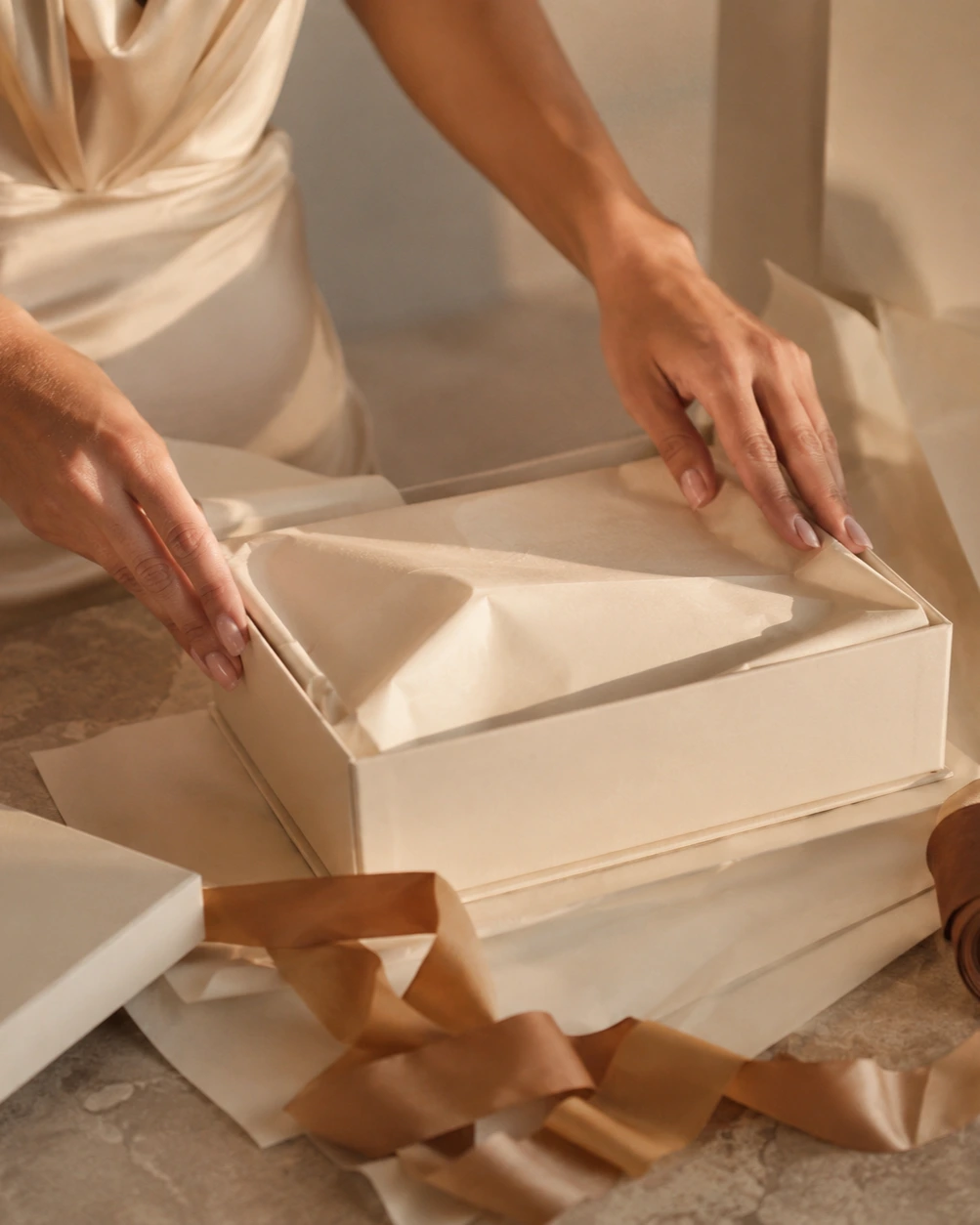
Light is gentle and patient and it will fade anything left in its path. A wardrobe should be a dark room. For pieces in long storage — a wedding gown, a piece of heritage embroidery — interleave the folds with acid-free tissue to prevent permanent creases, and refold along different lines once a year so no single crease becomes a fracture in the cloth. An archive is not a closet you forget. It is one you visit.
Spend an afternoon doing this once, and the wardrobe becomes self-sustaining. Each piece returns to its place clean, on its proper hanger or shelf, in the dark and the air. The clothes stop ageing the way left-alone things age, and start ageing the way good things should — slowly, with grace, becoming more themselves.