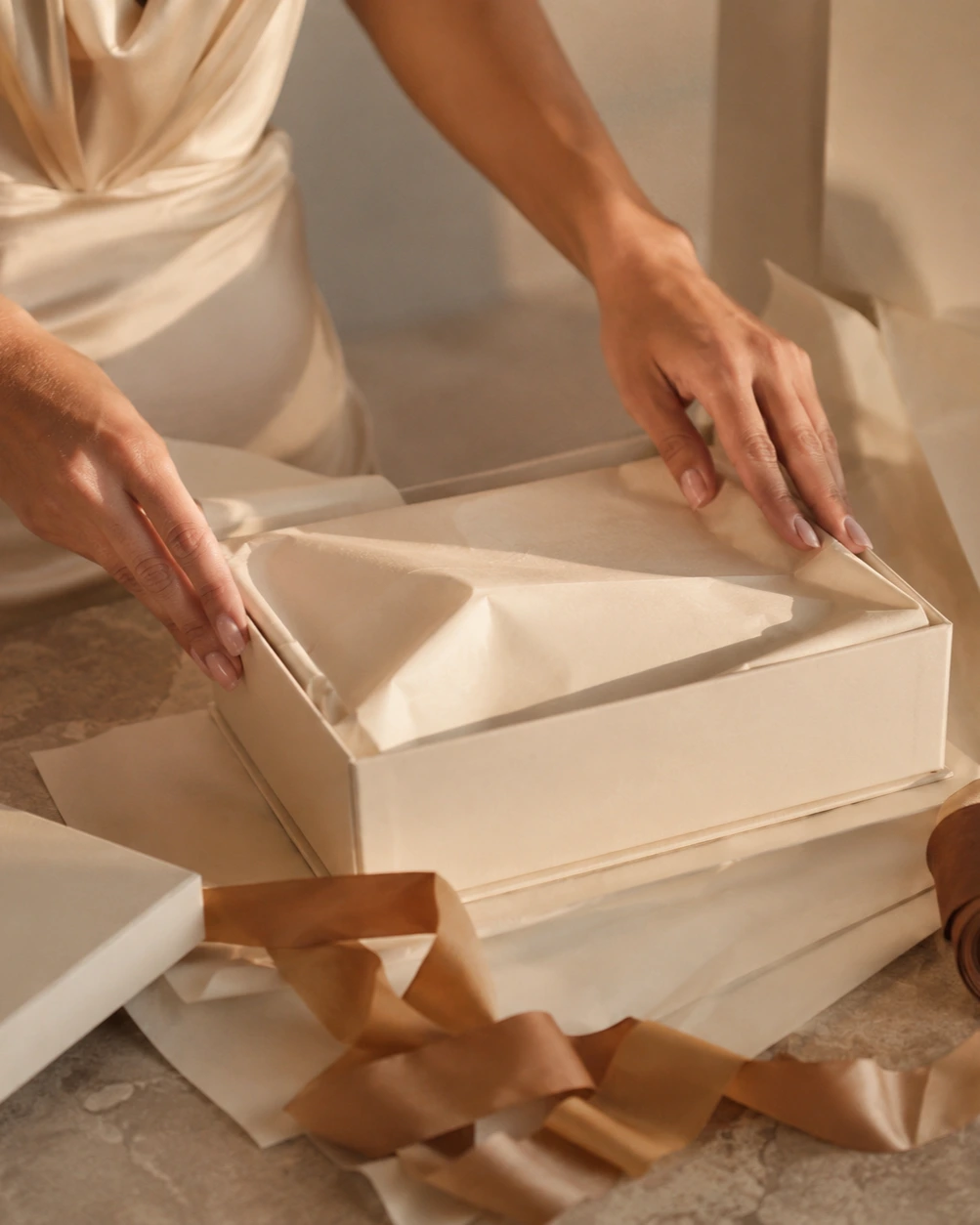
The small, considered collection of tools that lets you care for fine clothes at home — from the right soap to a cashmere comb, and what to leave on the shelf.
Caring for fine clothes at home asks for very little — but the little it asks for must be right. The wrong soap, a cheap steamer, a household stain remover reached for in panic; each of these does more harm in a moment than years of wear. What you need instead is a small, deliberate kit, gathered once and kept in a single drawer. None of it is expensive. All of it earns its place.
For washing
Two soaps cover almost everything. A pH-neutral, fragrance-free wash for silk — the atelier has long used plain baby shampoo, though a dedicated delicate wash is the considered choice. And a wool-specific wash for cashmere and knitwear, formulated without the protein-digesting enzymes that ordinary detergent uses, which would slowly dissolve the very fibres you are trying to clean. Keep nothing harsher than these two within reach of a fine garment.
For drying and pressing
- Two clean white cotton towels, kept only for clothes — one to roll the water out, one to lay the piece flat to dry.
- A handheld garment steamer — the single most useful tool for delicate fabric, gentler than any iron.
- A clean cotton press cloth, to place between the iron and any silk, wool or blend so the metal never touches the cloth directly.
- A flat drying surface or a mesh sweater rack, so knitwear dries reshaped and unstretched.
For the surface and the repairs
A cashmere comb or a battery sweater shaver keeps knitwear free of pills without pulling at live yarn. A natural-bristle clothes brush lifts dust and lint from wool and revives a coat between wears — a daily brushing, in the old tailoring tradition, does more to keep a jacket fresh than any cleaning. And a simple sewing kit — needles, thread in the colours of your wardrobe, a few spare buttons — lets you catch a loose thread or secure a button the moment it loosens, before it becomes a loss.
“The whole kit fits in one drawer and costs less than a single careless trip to the wrong cleaner. It is the cheapest insurance a wardrobe ever buys.”
Yaya, Founder & Creative Director
For storage
Broad wooden hangers for tailoring, padded hangers for the most delicate pieces, and cedar blocks and dried lavender to defend the natural fibres against moths. A few unbleached cotton or muslin garment bags for pieces in long rest — never plastic, which traps the humidity that breeds mildew. Acid-free tissue, for interleaving the folds of anything precious kept folded over time.
What to leave on the shelf
Just as telling is what the kit does not include. No ordinary detergent. No chlorine bleach, which weakens and yellows natural fibre. No supermarket stain pen, whose solvents are a gamble on fine cloth. No wire hangers, no plastic storage bags, no fabric softener — which coats fibres in a residue that dulls silk and reduces the loft of wool. A care kit is defined as much by restraint as by what it holds. Assemble these few right things, keep the wrong ones far away, and you can care for the finest wardrobe entirely with your own hands.