Why the silk woven in Thailand's northeast carries a weight, a lustre and a memory that no industrial thread can imitate — and how we choose it for the maison.
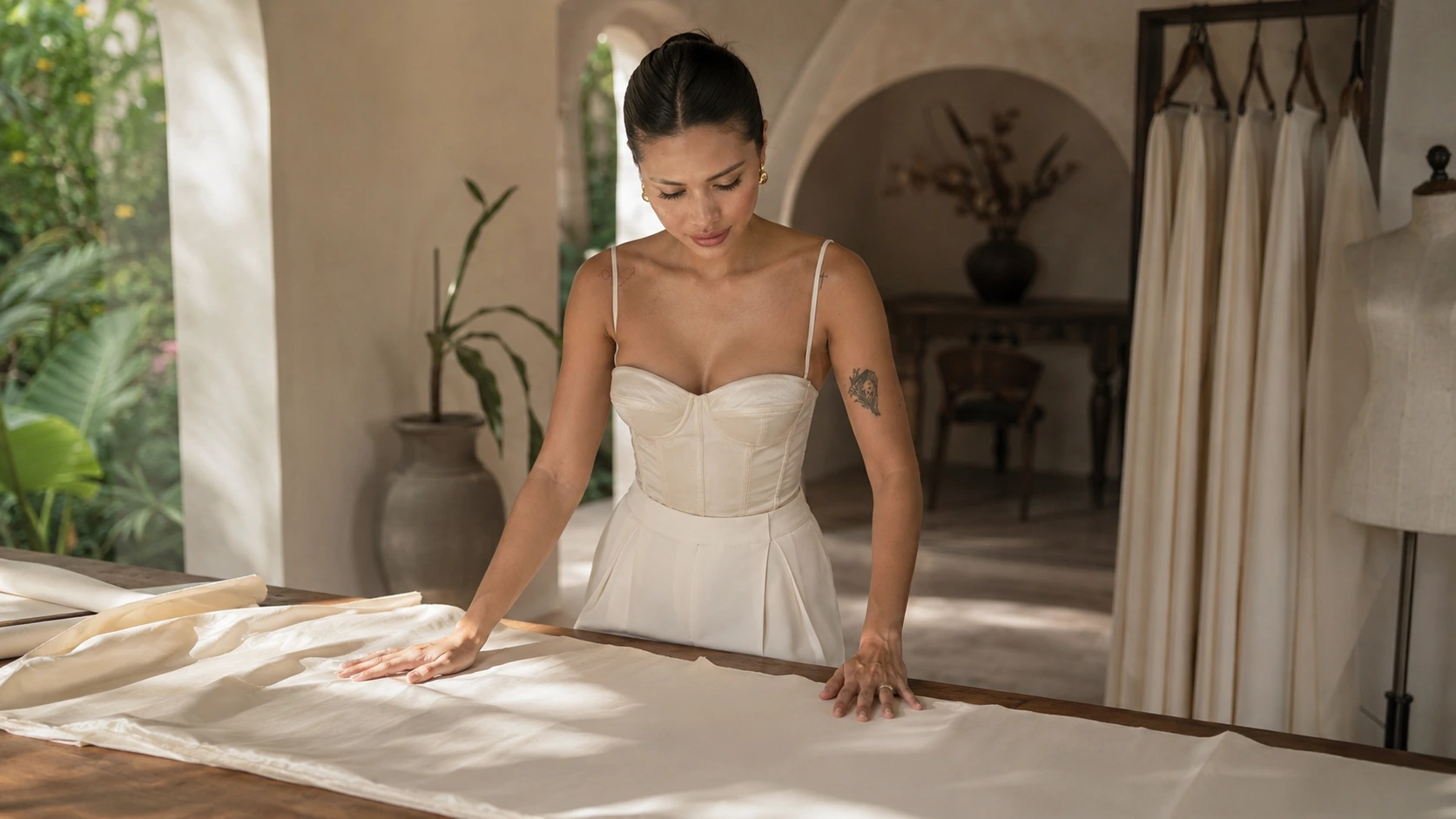
There is a particular hush that falls over a length of Thai mulberry silk when it is unrolled across the cutting table. It does not slither like the cheaper, thinner silks of mass production. It settles. It has weight — the quiet authority of a fabric that has been fed, reeled and woven by hand across months rather than minutes.
From the mulberry leaf to the loom
Thai sericulture begins, as it has for centuries, with the bombyx mori silkworm and the mulberry leaves it feeds on. In the northeast of Thailand — Isan — families still raise the worms in shallow bamboo trays, harvesting cocoons that are reeled into a raw thread the colour of pale honey. This native Thai silk is thicker and less uniform than the bleached white filament of industrial farms, and that irregularity is precisely its beauty.
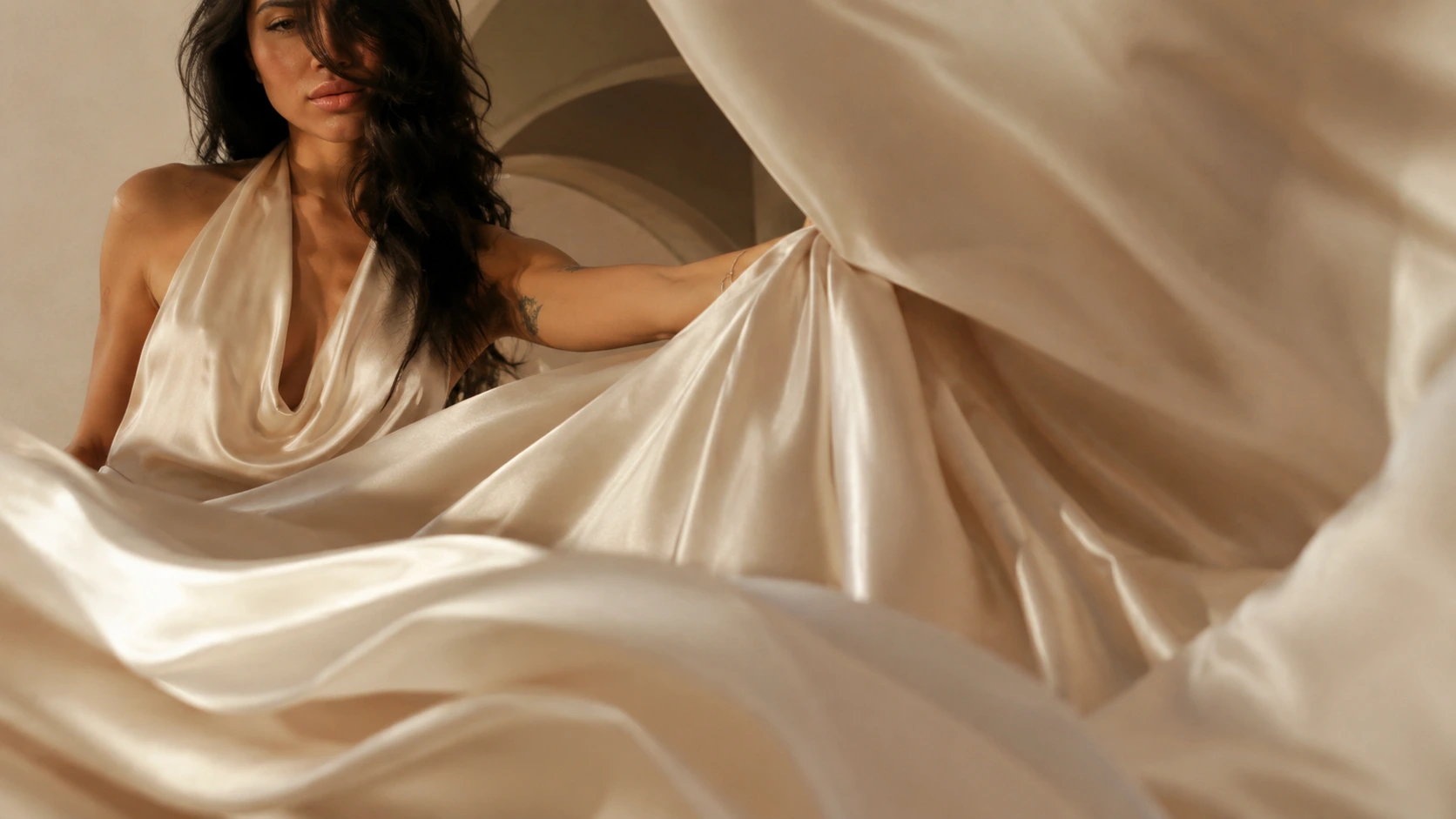
The slubs and gentle variations in the yarn catch the light differently along their length. Where machine silk reads as a flat, glassy sheen, hand-reeled Thai silk glows — it has depth, a sense of having been touched.
Why weight matters in couture
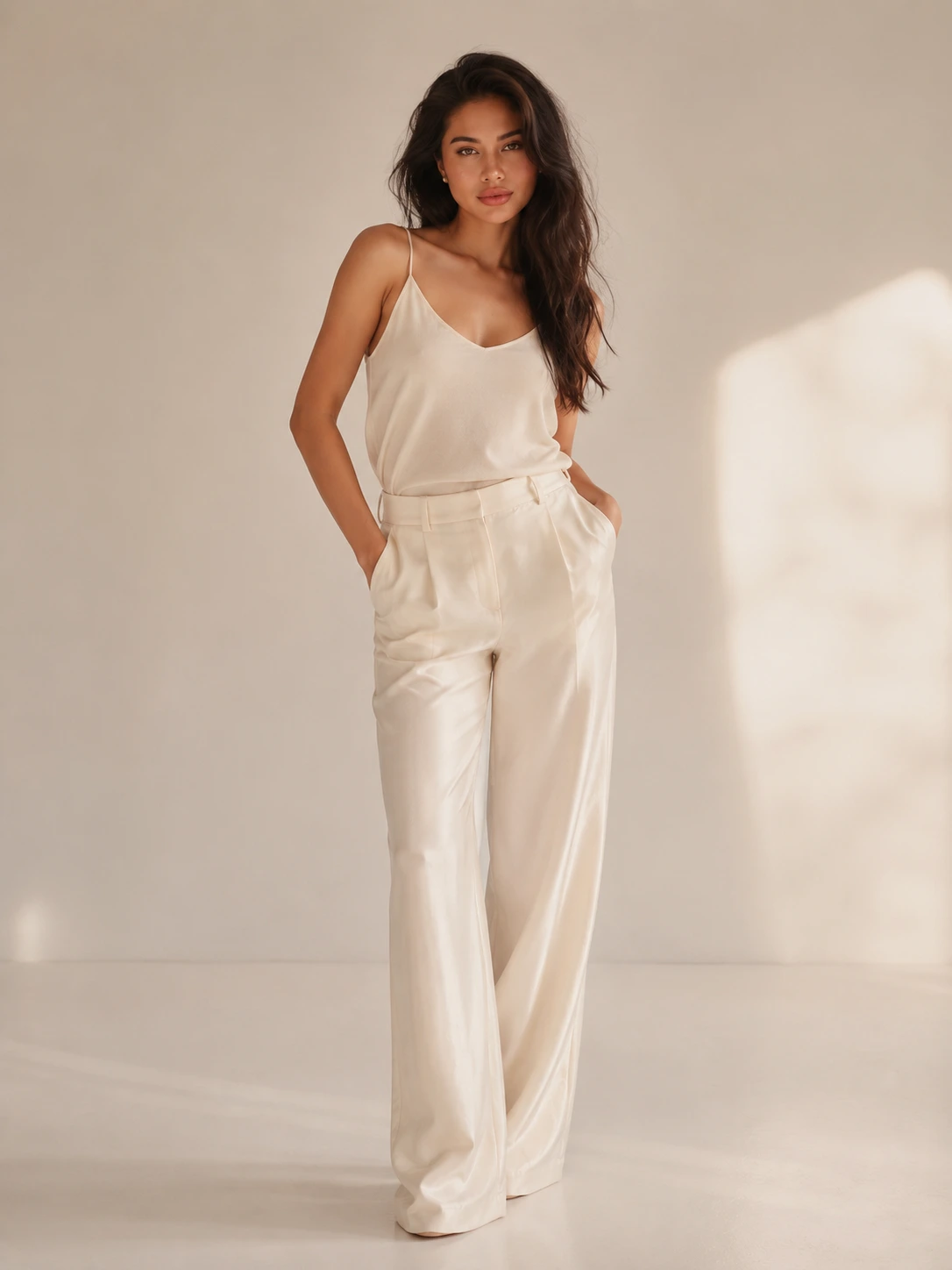
In couture, the weight of a cloth is not a flaw to be engineered away; it is the instrument through which a garment moves. A heavier silk holds a bias drape, falls into a column rather than clinging, and returns to its line after the body has shifted. It is the difference between a dress that follows you and a dress that merely covers you.
“We do not design for the photograph. We design for the moment the woman turns, and the silk turns a half-second after her.”
Yaya, Founder & Creative Director
How we choose silk for the maison
- Hand-reeled over machine-reeled, for the living irregularity of the thread.
- Mid to heavy weight (around 16–22 momme) for pieces meant to drape and hold.
- Undyed or naturally dyed bases, so the cream and champagne tones read as warmth, not bleach.
- A weave dense enough to carry a bias cut without puckering at the seam.
Every gown in the L'Aurore collection begins with this decision, made by hand, against the light of the atelier window. The cloth comes first; the silhouette is only ever an answer to what the silk already wants to do.