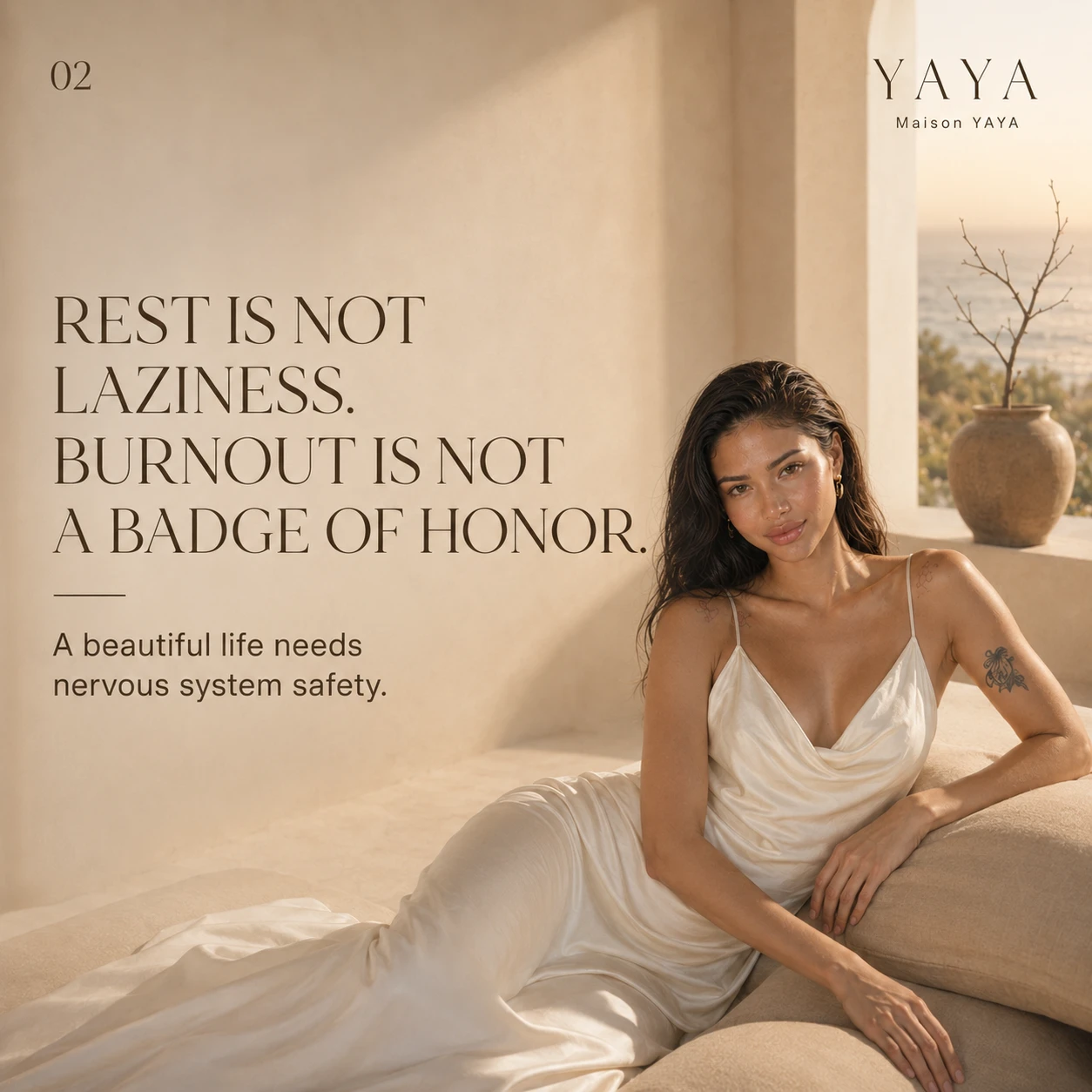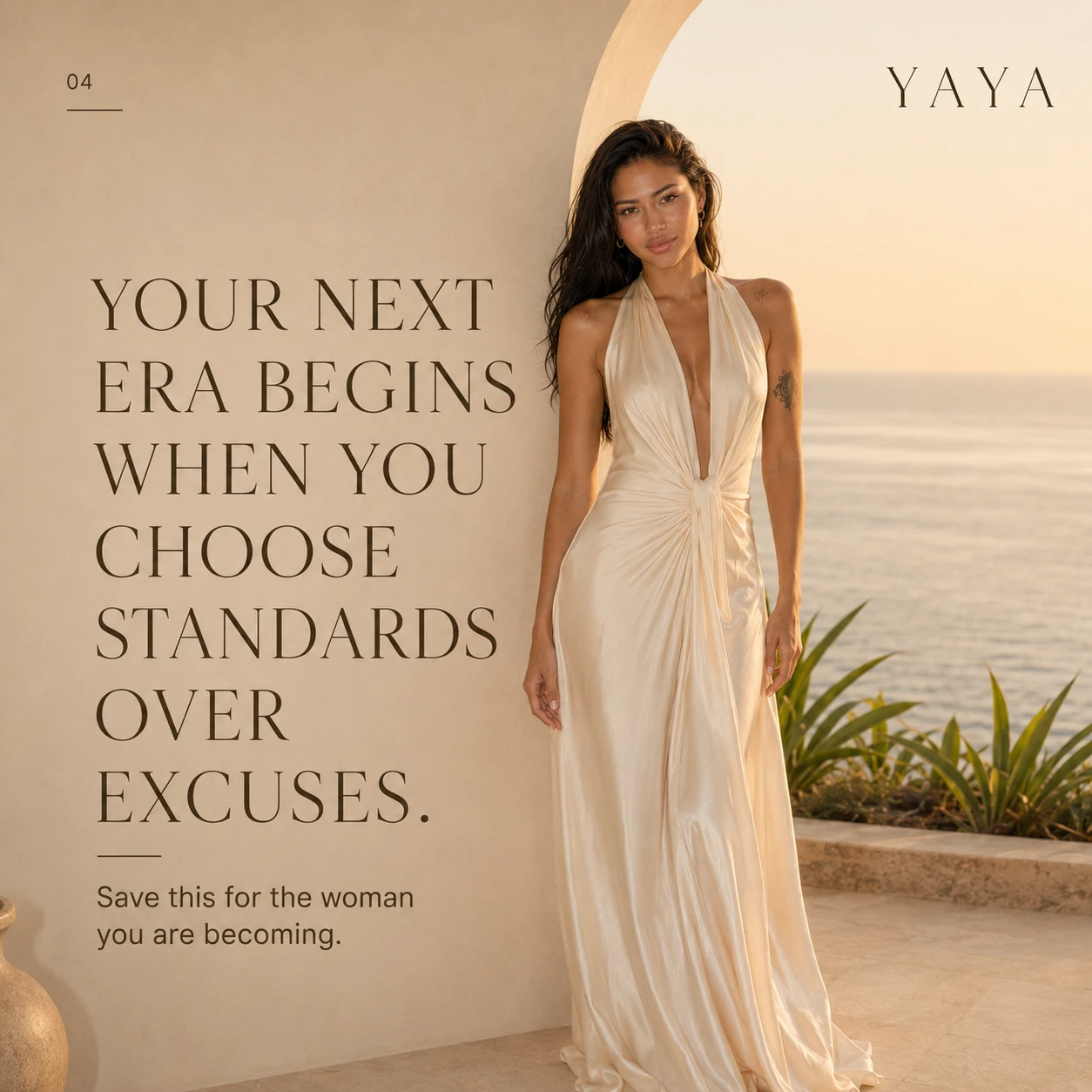
The bias slip is the wardrobe's most fluent piece — how to wear one to a luncheon, an office and a candlelit dinner without ever changing the dress beneath.
There is no garment more fluent than a well-cut slip. Bias-cut from a fluid silk, it reads as lingerie or armour depending entirely on what surrounds it. A single dress, layered three ways, can carry a woman through an entire day and into the night — never removed, only re-framed. This is the slip's quiet genius: it is less a dress than a foundation on which a day is composed.
Noon: the luncheon
For daylight, the slip wants company that softens it. Lay a fine-gauge knit over the shoulders — sleeves knotted loosely at the collarbone — or button a crisp white shirt beneath the straps so only the skirt shows below the hem. Flat sandals or a low loafer ground the look; a structured tote replaces any hint of evening. The bias still falls beautifully, but the message is leisure, not seduction. You are dressed for sunlight on a linen tablecloth.
Afternoon: the desk
A slip belongs at work more easily than most believe — provided it is governed. The instrument of governance is a jacket. A relaxed blazer or a fluid coat worn open turns the dress into the lining of an outfit rather than its whole statement.
- Add a blazer in a matching neutral; let only the hem and a sliver of strap appear.
- Trade evening heels for a sculptural flat or a block heel that carries you all day.
- Choose a slip in a deeper tone — bronze, slate, espresso — which reads more serious than ivory under office light.
- A fine gold chain at the throat reads as intention, not adornment.
“The slip dress is the most honest thing a woman can wear. Everything else in the outfit is the conversation she chooses to have around it.”
Yaya, Founder & Creative Director
Midnight: the dinner
Now you undress the look rather than build it. The jacket comes off; the knit is folded away. The bias is allowed to do what it was cut to do — trace the body, catch the candlelight, move a half-second behind you when you turn. Heeled and bare-shouldered, a single earring catching the flame, the same dress that murmured at noon now speaks in full voice. Nothing has changed but the light and the layers. The dress was always ready for both.
Why the cut matters more than the colour
All of this depends on the bias. A slip cut on the straight grain hangs flat and reads cheap at every hour; a true bias cut — the cloth turned forty-five degrees to the weave — falls like water and forgives the body its day. It is more expensive to cut, because it eats more fabric and demands a steadier hand at the table. But it is the difference between a dress that works once and a dress that works from noon to midnight, year after year. Buy the cut, and let the colour be quiet.
One dress, then, and three lives — perhaps more, once you begin to play. The slip rewards the woman who treats it as a beginning rather than a finished thing. Layer it, govern it, undress it. It will follow you anywhere.